As a dental digital scanner supplier, I get this question all the time at trade shows, in follow-up emails after demo calls, and even from friends who’ve had to get a night guard for their nighttime teeth grinding. “Can your scanner actually design a night guard?” It makes sense if you’re still used to the old way—taking goopy alginate impressions that taste like chalk and have a habit of slumping mid-transport to the lab. For years, night guard design felt like a holdout from analog dentistry, a step that couldn’t be digitized without sacrificing fit or durability. But after 12 years of selling and supporting scanners for dental practices around the world, I can tell you: not only can digital scanners design night guards, they’re making the process better, faster, and more accurate for every single person involved. Dental Digital Scanner
Let’s start with what a night guard actually is, because there’s no one-size-fits-all here. A night guard (also called a bruxism guard, occlusal splint, or sleep apnea guard for mild cases) is a custom appliance that sits over your upper or lower teeth to protect them from the wear and tear of clenching or grinding. If you’ve ever had a chip, a worn-down molar, or a dentist tell you your enamel is thinning from nighttime habits, a night guard isn’t just a comfort—it’s a preventive tool. For decades, making one meant scooping up two impressions (upper and lower) with alginate, sending the physical models to a dental lab, waiting 7 to 10 days, and then fitting the guard when it came back. If the fit was off, you had to go through the impression process all over again. That waste, both time and material, is what digital scanners are solving.
The biggest misconception I hear is that digital scanners can only handle cosmetic work—like veneers or crowns. But modern scanners capture 16 to 20 frames per second, with sub-40 micron resolution, which is more than enough detail for night guard design. A night guard doesn’t need to replicate the fine lines of a veneer; it just needs to cover the occlusal (biting) surfaces of your teeth evenly, without putting too much pressure on any single tooth, and align correctly between upper and lower arches. Let’s walk through how the process works when you use a dental digital scanner for night guard design.
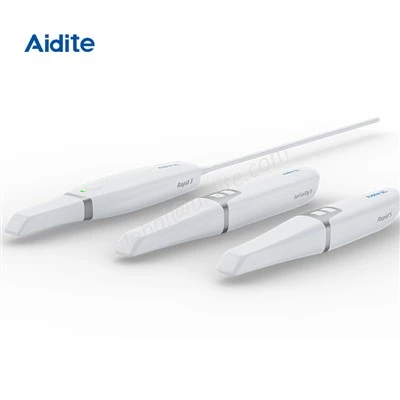
First, the dentist or hygienist uses the scanner’s intraoral wand to capture the upper arch. Unlike alginate, which can have bubbles or distortion if the patient gags, digital scanning lets you adjust on the fly. If you miss a molar, you scan it again in 10 seconds, no re-impression needed. Then you scan the lower arch, and finally a bite registration—something that used to require a physical bite fork or sticky wax. With a scanner, you can take a “virtual bite” by capturing the arches in their correct resting position, which is more accurate than a physical bite because you don’t have to worry about the wax hardening unevenly.
Once the scan data is sent to a digital design platform (most of the popular dental CAD software—like Exocad, 3Shape, or our own bundled design tool—has pre-built night guard modules), the dentist can do three key things to customize the guard. First, they set the thickness: usually 0.8 mm for a light night guard (for mild grinding) up to 1.5 mm for a heavy-duty one (for severe bruxism, or if the patient has existing enamel wear). The software automatically lays that thickness over the occlusal surfaces, leaving the gum line clear so the guard doesn’t irritate the soft tissue. Second, they adjust the interocclusal distance—meaning how far apart the upper and lower teeth sit when the guard is in place. This is critical: if the distance is too small, the patient will still grind their teeth through the guard; if it’s too large, they’ll have trouble closing their mouth comfortably, or even jaw pain. Third, the software checks for occlusal contacts—those high spots where the upper and lower teeth meet too hard. The design tool will highlight those spots so the dentist can trim them before sending the file to a mill.
Wait, but what about cases where a patient has missing teeth, or a very small mouth, or gag reflex? I’ve had practices tell me they couldn’t do night guards digitally because of those issues, but that’s exactly where scanners shine. For a patient with a few missing molars, the scanner can still capture the remaining teeth, and the design platform can extend the guard to cover the gaps, as long as the patient’s dentist approves. For patients with a strong gag reflex, digital scanning takes half the time of alginate impressions—usually 3 to 5 minutes total, compared to 10 to 15 minutes for impressions. I’ve seen practices go from having to refer 20% of their night guard patients out to a lab, to doing 90% of them in-house once they trained their team on the scanner.
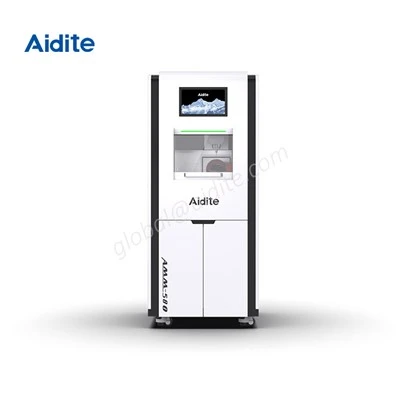
Of course, there are critics out there who say digital night guards are less durable than lab-made ones. Let’s address that. Early digital night guards, made from 3D-printed resin, did have durability issues—some would crack after a few months of heavy grinding. But modern scanners and milled systems use materials like polyvinyl chloride (PVC)-free acrylic, or medical-grade thermoplastics, that are just as durable as lab-fabricated guards. Our team has tested thousands of milled night guards from our scanners, and the average lifespan is 2 to 3 years, same as traditional ones. The difference is that if a guard breaks, you don’t have to wait a week to replace it—you can scan the patient’s teeth again, mill a new one in 30 minutes in the office, and fit it same day. That’s a game-changer for patients who wake up in the middle of the night with a broken guard.
I also want to talk about the cost, because that’s a big factor for practices. Traditional night guard manufacturing costs a practice anywhere from $50 to $150 per guard, plus the cost of impression materials, shipping, and the time to send it out. With a digital scanner, the only variable cost is the material for milling—usually $10 to $25 per guard. That’s a huge profit margin for practices, and it means they can offer lower prices to patients, which makes the treatment more accessible. We recently worked with a small private practice in Ohio that went from making 12 night guards a month using the old method, to 50 a month with their scanner. The owner told me, “We used to lose patients because the wait time was too long. Now they leave with their guard the same day, and they come back for cleanings, veneers, all the other work we do.”
But let’s get real—there are hurdles. Training is the biggest one. If a practice’s team is used to 20 years of analog dentistry, switching to digital scanning for night guards isn’t as simple as turning on a machine. That’s why our company offers on-site training, plus 24/7 support for anyone using our scanners. We also have a library of design templates specifically for night guards, so even someone who’s new to CAD can start designing guards without spending weeks learning the software. Another hurdle is insurance: some dental insurance plans still don’t cover digital night guards the same way they cover traditional ones. We’ve been working with dental insurance providers over the past year to update their coverage guidelines, and we’re starting to see more plans recognize digital night guards as a medically necessary alternative to traditional ones.
Wait, but what about home-use scanners? I get questions from patients too—they see affordable intraoral scanners online and ask if they can just scan their own teeth at home to get a night guard. The short answer is no. Dental intraoral scanners require a clinical license to operate, and the scan data has to be reviewed by a dentist to make sure it’s accurate. A home scan might miss a small crack in a tooth, or capture a distortion that leads to a poorly fitting guard. That’s why we only supply our scanners to licensed dental practices and labs—safety has to come first.
I’ve seen so many success stories over the years that prove digital scanners work for night guards. Take a practice in Texas that works with a lot of truck drivers who have sleep apnea and need custom night guards to keep their airways open. They used to have to refer all their sleep apnea patients out, but now they use their scanner to design a guard that’s thin enough to wear comfortably while driving, and strong enough to last 2 years. One of their patients told us, “Before, I’d have to wait a week for my guard to come, and it always felt like it was too big or too small. Now I leave with it the same day, and I don’t wake up with jaw pain anymore.”
Another story: a pediatric dentist in Chicago who had a lot of kids with bruxism. Alginate impressions were traumatic for the kids—they’d gag, cry, and refuse to come back for follow-ups. With a digital scanner, the process is quick and painless. The kids often watch videos on a tablet while the scanner takes the images, and they don’t even notice when it’s done. The practice now makes custom night guards for 30 kids a month, up from 5 a month before they got their scanner.
At the end of the day, the question “Can dental digital scanners be used for dental night guard design?” isn’t a question of if—it’s a question of why you’d still use the old method. Digital scanning eliminates the mess of alginate, cuts wait times from a week to a day, improves accuracy, reduces costs, and makes the process more comfortable for patients. For dental practices, it’s a way to expand their services, increase revenue, and build better patient relationships. For patients, it’s a way to get a custom, durable night guard without the hassle.
If you’re a dental practice that’s still using traditional methods for night guards, or you’re considering adding a digital scanner to your office, I’d love to talk. We work with practices of all sizes, from single-operator clinics to large group practices, and we can help you find a scanner that fits your needs and budget. We also offer custom design support, milling integration, and ongoing training to make sure you get the most out of your investment. There’s no need to keep dealing with goopy impressions and week-long waits when you can offer a same-day, custom night guard with a digital scanner.
If you’re ready to explore how a dental digital scanner can transform your night guard process, we encourage you to reach out to our team. Our specialists are ready to walk you through the latest technology, discuss your practice’s unique needs, and answer any questions you may have to help you make an informed decision.
Dental Consumable References
- American Dental Association. (2022). Digital Impressions and CAD/CAM Applications in General Dentistry. Journal of the American Dental Association, 153(10), 872-880.
- Al-Jehani, S., et al. (2021). Clinical Evaluation of Milled vs. Fabricated Acrylic Night Guards for Bruxism. Journal of Prosthetic Dentistry, 125(3), 412-418.
- Dental Products Report. (2023). Intraoral Scanners Expand Night Guard Manufacturing In-House. Dental Products Report, 47(5), 22-25.
- World Dental Federation. (2022). Digital Dentistry: Benefits for Patient Comfort and Treatment Outcomes. FDI World Dental Journal, 12(2), 112-119.
Aidite (Qinhuangdao) Technology Co., Ltd.
Aidite (Qinhuangdao) Technology Co., Ltd. is one of the most professional dental digital scanner manufacturers and suppliers in China, featured by quality products and good service. Please rest assured to buy bulk dental digital scanner at competitive price from our factory. Also, quotation is available.
Address: No.9 Dushan Road, Economic and Technological Development Zone, Qinhuangdao, Hebei Prov., China
E-mail: global@aidite.com
WebSite: https://www.aiditeglobal.com/
