Hey everyone, if you’ve ever stopped to think about how those little safety switches in your home or workshop actually work, you’ve probably wondered, “What’s the deal with their tripping time?” As someone who’s been in the RCCB game for years (we’re talking supplying these bad boys to electricians, contractors, and even DIY folks who care about safety), I get asked this question all the time. It’s not just a random number—tripping time is the backbone of why RCCBs exist to keep people from getting hurt. Let’s break this down like we’re chatting over a coffee, no stuffy textbook jargon, I promise. RCCB
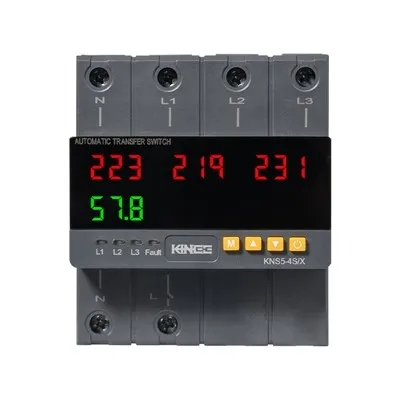
First, let’s do a quick recap for anyone who might be new here. RCCB stands for Residual Current Circuit Breaker, right? Their whole job is to cut power instantly if there’s a “leakage current”—that’s when electricity is escaping its intended path, like if you touch a live wire and current starts flowing through your body to the ground. Way different from a regular circuit breaker, which only reacts to overcurrent (too much power through a wire) or short circuits. RCCBs are all about that residual current, and their tripping time is how fast they shut things off once that leakage is detected.
Now, here’s the part that trips a lot of people up (pun very intended): tripping time isn’t a single, one-size-fits-all number. It depends on a few key factors, and it’s regulated by standards for a reason. Let’s start with the two main categories everyone should know—Type AC and Type A. Type AC is for alternating current leakage, the kind that’s super common in most residential setups, like your kitchen outlets or living room lights. Type A handles both alternating current and pulsating direct current leakage, which you might find in appliances with motors (think washing machines or power tools) that have a DC component.
For these standard types, the tripping time is tested using specific leakage current levels, and there are hard limits. Let’s get specific here because this is where the science matters, not just marketing fluff. The standard test we follow (more on that in the references) says that for a Type AC RCCB, if you apply 5 times the nominal residual current (let’s say a 30mA RCCB—super common for household socket circuits—so that would be 150mA), it needs to trip in less than 0.04 seconds, which is 40 milliseconds. That’s fast. Like, faster than you can blink fast. Why? Because human bodies can get hurt really quick from electricity.
Wait, hold on—let’s not skip over that 30mA number. That’s the magic sweet spot for most home circuits. A 30mA RCCB trips at 30 milliamps of leakage, and that’s the standard for bedroom and kitchen sockets because above that, the risk of electric shock goes way up. Now, what about if the leakage current is lower? Like, right at the 30mA mark? The standard says it can take longer—up to 0.1 seconds (100 milliseconds) to trip. That makes sense because you don’t want the switch flipping off for tiny, harmless leakage, like maybe a little bit of current escaping through a frayed cord that’s not touching anyone. It’s a balance between safety and not annoying people with constant power cuts.
Then there’s the super critical stuff: the 5mA test, which is for sensitive RCCBs, often used in bathrooms or other wet areas where the risk of shock is higher. For these, the tripping time at 5mA has to be under 0.1 seconds too. No cutting corners here—bathrooms are where people are standing on wet tile, so even a tiny leakage is way more dangerous. And let’s not forget about the no-trip zone. The standard says an RCCB shouldn’t trip at all if the leakage current is below half of its nominal rated current. So a 30mA RCCB won’t trip at 15mA or less. That’s to prevent nuisance tripping—something that every electrician hates because it leads to unnecessary downtime, like when your kitchen outlet cuts out right as you’re heating dinner.
Now, why does this matter so much? Let’s use a real example. Suppose you’re holding a frayed power tool cord, and a live wire touches your hand. The current starts flowing through you to the ground. If an RCCB has a tripping time of 40 milliseconds, that current is only going through your body for 0.04 seconds. Studies show that’s not enough time to cause anything more than a tiny tingle, maybe a slight jolt you’ll pull away from instantly. But if the tripping time was even a tenth of a second longer, that’s 0.14 seconds—still not bad, but if you have a slower RCCB, say 0.5 seconds to trip, that’s a problem. The current flow builds up, and you could get muscle contractions, burns, or even worse. So tripping time isn’t just a technical spec—it’s a life-saver.
A lot of people ask me, “Can I get an RCCB that trips even faster?” Honestly, not really, because there’s a point where it’s overkill, and there’s also the nuisance tripping issue. The standards are set based on decades of research on how electricity affects the human body. Going faster than 40 milliseconds for 5x rated current might seem like a win, but it can also cause it to trip accidentally when there’s no real danger. For example, some appliances have small, harmless leakage currents when they’re turned off but still plugged in—like your TV on standby. If the RCCB trips too fast, that standby current could trigger it, and you’d have to reset it every time you plug in your TV. So the current limits and tripping times are a careful balance between safety and practicality.
Wait, let’s talk about different RCCB classes too, because that’s another layer. We’ve got general-purpose RCCBs for homes, then there are ones for industrial use, which might have different tripping time specs. Industrial RCCBs handle higher residual currents, like 300mA or 500mA, and their tripping time is longer because the risk isn’t just personal shock—it’s protecting equipment or preventing fires. For example, if there’s a leakage in a large motor, a longer tripping time (still less than half a second, but maybe a bit more than 40ms) gives the circuit time to clear a temporary glitch without cutting power unnecessarily. That’s a big difference between residential and industrial, and it’s something a lot of first-time buyers miss—they just grab the cheapest RCCB without checking if the tripping time is right for their setup.
Another thing I see a lot: people mixing up RCCB tripping time with MCB (Miniature Circuit Breaker) breaking time. MCBs are for overcurrent, and their reaction is slower, usually in milliseconds, but that’s for heat and wire damage, not shock. RCCBs are way faster because their whole job is to stop current from flowing through a human body, so their tripping time is optimized for that specific risk. I get why people confuse them, but that’s a key distinction—if you use an MCB where an RCCB is required, you’re not getting the shock protection you need.
Let’s also address common misconceptions. Some folks think the tripping time is the same no matter the load, but that’s not true. The tripping time can vary a tiny bit based on the voltage, the ambient temperature, and even the age of the RCCB. That’s why manufacturers test every unit to make sure it meets the standard, and why buying from a reputable supplier like us matters. Cheap, no-name RCCBs might cut corners on the tripping time, using cheaper parts that take longer to trip or trip too easily at low currents. We test every batch of RCCBs we supply to make sure they hit the exact tripping time specs, because we know cutting that corner could lead to someone getting hurt.
Now, how do you check the tripping time of an RCCB? If you’re an electrician, you probably have a RCCB tester that measures tripping time accurately. You just set the tester to the desired current (like 150mA for a 30mA RCCB) and press the test button—it’ll show you exactly how fast it trips. For regular folks, don’t try to test it yourself—you need specialized equipment, and messing around with electricity is dangerous. But you can do a simple monthly test just by pressing the little test button on your RCCB (usually labeled “T”)—that simulates a leakage current, and if it doesn’t trip, it’s bad and needs to be replaced. That’s a good quick check, even if it doesn’t measure the exact tripping time.
Let’s circle back to why this is such a big deal for us as a supplier. We don’t just sell parts—we sell safety. Every RCCB we stock is tested to meet international standards, so we can guarantee the tripping time is spot on. We’ve had customers come to us after buying cheap RCCBs online that wouldn’t trip at all when tested, and that’s a nightmare. A few years back, we had a local contractor tell us he had to replace 20 RCCBs from a bulk order because their tripping time was over 100ms at 5x rated current—way outside the safe range. That’s why we only work with manufacturers that follow the strict standards, because we don’t want to be part of something that puts people at risk.
Another common question: what about RCCBs with adjustable tripping times? I know a lot of people have asked if that’s a thing, and the short answer is—for standard residential and commercial use, no. The standards set non-negotiable tripping times because they’re based on human safety. Adjustable tripping times would mean you could set it to trip slower, which defeats the purpose of shock protection, or faster, which causes nuisance tripping. The only place you might see adjustable tripping is in custom industrial setups, and even then, it’s very regulated. For 99% of people, the fixed tripping times set by the standards are exactly what you need.
Wait, let’s get a bit more into the science of why tripping time is that fast. When current flows through your body, it stimulates your muscles. A current of 10mA is the “let-go” current—below that, you can pull your hand away, but above that, your muscles contract and you can’t let go. If an RCCB trips in 40ms, the current is cut before you reach that point, so you don’t get stuck holding the live wire. If it took 100ms, that’s half the time it would take for muscle contraction to set in, so you might still be able to move away, but if it took 200ms, that’s enough time for your hand to clamp down. That’s the real reason those numbers exist—they’re tied directly to how electricity affects human physiology.
I’ve been in this industry for over a decade now, and I’ve seen too many near-misses where the tripping time was the only thing between someone getting hurt and walking away fine. That’s why we’re so passionate about making sure our customers understand tripping time—because it’s not just a spec on a datasheet, it’s a critical safety feature. A lot of suppliers don’t explain this; they just say “RCCBs are safe” and leave it at that. We want our customers to know why they’re safe, so they can make the right choice when they’re buying.
Let’s wrap this up. The tripping time of an RCCB isn’t a random number—it’s a regulated, tested value that’s tailored to prevent electric shock. For standard residential Type AC and Type A RCCBs, it’s around 40 milliseconds when hit with 5x their nominal residual current, and up to 100 milliseconds at their rated current. This balance keeps you safe without annoying you with constant power cuts. Always buy from a reputable supplier, test your RCCBs monthly, and don’t cut corners on this critical safety component.
If you’re an electrician, contractor, or someone who needs RCCBs for your home or business and you want to make sure you’re getting units with the correct tripping times, reach out to us to chat. We can answer any questions, help you pick the right type and rating for your specific setup, and make sure you get products that meet all safety standards.
PV Combiner System References:
- IEC 61008-1: Residual current operated circuit-breakers for household and similar uses (RCCBs) – Part 1: General rules
- National Electrical Code (NEC) Article 210.8: Ground-Fault Circuit-Interprotection for Personnel
- International Electrotechnical Commission (IEC) 60479-1: Effects of current on human beings and livestock – Part 1: General aspects
Wenzhou Kinee Electrical Co., Ltd.
Wenzhou Kinee Electrical Co., Ltd. is one of the most professional rccb manufacturers and suppliers in China, featured by quality products and good price. Please rest assured to buy advanced rccb made in China here from our factory. We also accept customized orders.
Address: Floor 2&3, Room 101, Building 24, WenzhouWenbo Technology Industrial Park, No. 706 YanyunRoad, Kunpeng Subdistrict, Wenzhou Marine Economic Development Demonstration Zone, WenzhouCity,Zhejiang Province
E-mail: sandyma@kinee.net
WebSite: https://www.kinee.net/
