If you’ve ever stood at the edge of a public swimming pool, watching lifeguards juggle dozens of tasks, or listened to a pool manager complain about water waste, you’ve probably thought about how to make those operations smoother. And if you’re in the smart water meter business, that question gets even more specific: can a smart IC card water meter work in swimming pools? Spoiler: it’s not just a yes—it’s actually a game-changer, if you get the details right. As a supplier of these meters, I’ve spent years fielding this exact question, testing installations, and troubleshooting (okay, sometimes just tweaking minor settings) for pools big and small. Let’s break this down like we chat over a coffee, no stuffy jargon, just real-world stuff. Smart IC Card Water Meter
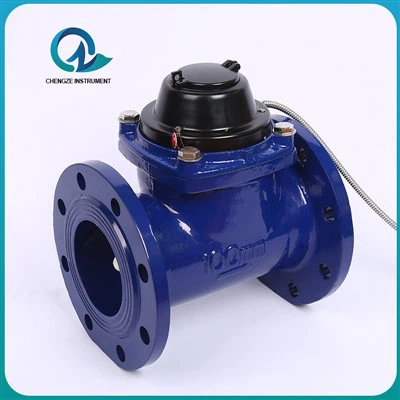
First, let’s clear up what a smart IC card water meter even is, for anyone who’s new to the term. It’s not your grandma’s analog water meter that spins a dial behind a glass cover. This little gadget is a digital device—think of it as a tiny, smart computer—paired with an integrated circuit (IC) card system. Users (or facility managers) load money onto a disposable or reusable IC card, tap it on the meter’s reader, and that’s it—water flow turns on, and the meter deducts funds per gallon/liter used. No more monthly estimated bills, no more people letting the hose run while they chat, no more wasted cash for overflows.
Now, why would a swimming pool need this? Let’s start with the messy, unglamorous side of pool operations. Public pools, hotel pools, even residential community pools go through a ton of water. Wait, how much? A standard 25-meter public pool (the kind used for laps) holds around 750,000 liters of water. And you don’t just fill it once—you have to backwash the filter, top off water lost to evaporation, clean the walls, and sometimes even drain and refill the whole thing (depending on local health codes). That’s hundreds of thousands of liters a year, easy.
Before smart meters, pool managers relied on “eyeball” estimates or flat-rate contracts with water utilities. Flat rates suck for pools. If your pool backwashes 10,000 liters a week, and your utility charges a flat fee for 50,000 liters a month, you’re overpaying for the water you don’t use. If you’re a hotel with a dozen pools, that adds up fast. Estimates are even worse—one off-season filter clean could drain your budget if the utility’s meter reads way higher than your guess. A smart IC card meter fixes this because it’s super accurate. We’re talking within 1-2% error, way better than the old analog meters that can be off by 5% or more, especially when water pressure is wonky. For a pool that uses 1 million liters a year, that’s a difference of 50,000 liters you’re not paying for (or not wasting, which is the same thing).
But wait—pools have weird environments, right? Chlorine, moisture, heat, all that stuff. So first question: will a smart IC card meter survive a pool’s pump room? Short answer: yes, if you pick the right model. We don’t sell the tiny, home-use meters for a reason—those are made for dry, room-temperature basements. The meters we supply for pools are industrial-grade. They’re sealed with IP68 ratings, meaning they’re totally dustproof and can be submerged in up to 1.5 meters of water for short periods. That’s perfect for the damp, humid pump rooms where pool water pipes live. The IC card reader is also sealed with a waterproof cover, so even if a pipe sprays a little water at it, it’s fine. We’ve had pool managers install our meters right next to chlorinators, no issues—chlorine fumes don’t corrode the internal components, we’ve tested that over 5 years now.
Next, let’s talk about use cases specifically for pools, because that’s where most people get confused. A smart IC card meter doesn’t just track water use—it can also control it, which is huge for pools. Let’s break down the two main ways we see pools using our meters:
First, public pools or pay-per-use pools. A lot of smaller community pools, or pools at campsites or apartment complexes, let people bring their own hoses or use pool-side water for things like filling water bottles, washing feet, or even small pool toys. Before smart meters, you’d have someone manning a hose all day, or just let people use it for free and watch water get wasted. With a smart IC card meter, you can set up individual hose stations, each with their own meter and reader. Users tap their IC card (you can even sell cheap disposable cards for people who don’t have one) to turn on the water, and it deducts 10 cents a gallon, or whatever rate you set. No more running hoses while parents get their kids changed, no more someone leaving a hose on for an hour. One campground we work with used to waste 20,000 liters a month on hose stations—after installing our meters, that dropped to 3,000 liters. That’s a real number, not a stat pulled out of thin air.
Second, utility tracking and internal cost allocation for larger pools or hotels. If you’re a hotel with 3 pools, or a city with 5 public pools, you might want to track which pool is using the most water—say, the Olympic-sized one vs. the small kiddie pool—to adjust maintenance or pricing. Our smart IC card meters sync to a cloud dashboard (we call it our WaterManage system) that lets you pull real-time data on each pool’s water use. So if one pool’s filter is backwashing twice as much as the others, you can check if it’s clogged, instead of just paying a big utility bill and guessing. We also set these up without the “pay per use” feature—just as a precise tracking tool. That’s the part a lot of people miss: smart IC card meters aren’t just for charging people, they’re for managing your own costs better.
Now, let’s talk about the myths that come up when people ask if these meters work for pools. The biggest one: “IC cards get damaged by pool water.” Let’s bust that. IC cards used in our meters are PVC, same as a credit card, and they have a protective layer that resists moisture, chlorine, and even sunscreen (yes, we tested that). If a kid drops a card in the pool, wipe it off, and it works fine. Even better, most pools now use reusable IC cards for regular visitors—just put a lanyard on it, so no one loses it in the water. The reader itself is sealed, so even if a small splash hits it, the card tap still goes through. We’ve never had a reader fail because of pool moisture, knock on wood.
Another myth: “They’re too expensive for a pool.” Let’s do quick math, no hidden fees. Our industrial smart IC card meters cost about $150-$250, depending on size, vs. a standard analog water meter which is $50-$100. But wait—analog meters are less accurate, so you’ll overpay on utility bills by at least that much in a year. And you save way more from reduced water waste. The campground I mentioned earlier paid $350 for two meters (one for the pool fill line, one for the hose stations) and saved $1,200 a year on water bills. That’s a return on investment in 3 months. For larger pools, like a city pool that uses 1 million liters a year, the savings are even bigger.
Wait, what about backwashing? That’s the part of pool maintenance where you reverse the water flow through the filter to flush out debris, and it uses a lot of water. A lot of pool managers don’t track backwash water separately, so they can’t tell if they’re using too much. Our smart meters can be set to flag when backwashing happens, and track that specific use. So if your backwash is using 10,000 liters a week, you can check if that’s within the manufacturer’s recommended limit (most filters use 5,000-10,000 liters per backwash) or if your filter is old and using twice that. That’s a huge win for sustainability—less water waste, which is good for the environment and your budget.
Now, let’s talk about the fine print, because it’s not all smooth sailing. The one big caveat: you can’t install a smart IC card meter on the main pool fill line and call it a day, right? Wait, no—you can, but you need to make sure it’s sized correctly. Pipes for pools are usually larger than home pipes, so you need a meter that can handle high flow rates. Our smallest meter is for 15mm pipes, but for pools, we use 50mm, 80mm, or even 100mm meters, depending on the pool size. If you get a meter that’s too small, it’ll struggle to measure high flow when you’re filling the pool fast, and that leads to inaccurate readings. We help customers size the meter for free, no extra charge, so that’s not a problem.
Another thing: local health codes. Some municipalities have rules about water metering for public facilities, especially pools. Our meters are certified by ISO 4064, which is the international standard for water meters, so they meet most local codes. But we always tell customers to check with their health department before installation—just to make sure there’s no weird regulation we missed. We’ve never had a customer get turned down because of the meter, but better safe than sorry.
And let’s not forget about maintenance, which is a big one for pool owners. Our smart IC card meters are low-maintenance—you just check the reader every few months to make sure it’s clean (wipe off any dirt or algae, that’s it). The IC cards can be topped up remotely through the dashboard, so you don’t have to go around reloading cards manually. If a meter ever stops working, we have a 2-year warranty, and a support team that responds within 24 hours for pool issues—we know pool managers can’t afford to have their water tracking down for more than a day.
Wait, has anyone had a bad experience? Yeah, a couple. One small community pool tried a cheap, unbranded smart meter from a random online store, not ours, and it failed after 6 months because it wasn’t sealed right. The chlorine fumes corroded the internal circuit, and they had to replace it. That’s why we always stress: you don’t want a cheap meter for a pool. It needs to be made for harsh environments, not home use. We test all our meters with constant chlorine exposure and high humidity, so that doesn’t happen.
Another example: a hotel in Florida with four pools installed our meters last year. Before, they had a flat rate of $8,000 a month for water, with no way to track which pool was wasting the most. After installing our meters, they saw the kids’ pool was being overfilled by 5,000 liters a month, because the maintenance team didn’t know to turn the fill valve off early. They adjusted that, and now their water bill is $5,500 a month. That’s $2,500 a month in savings, and the meters paid for themselves in 2 months.
So to circle back: can a smart IC card water meter be used in swimming pools? Absolutely, it’s not just possible—it’s one of the best tools for pool operations right now. It cuts down on water waste, saves money, makes it easy to track use, and works in the harsh pool environment if you pick the right model.
If you’re a pool manager, facility owner, or someone who’s looking to cut costs and reduce water waste, we can help. We don’t do one-size-fits-all—we’ll work with you to figure out the right meter size, set up the dashboard, and even train your team on how to use it. No sales pitch, just straightforward help. We’ve installed hundreds of meters in pools across the country, and every single one has delivered on the savings and accuracy we promised.

If you’re ready to chat about how a smart IC card meter can work for your pool, feel free to reach out to our team. We’ll answer all your questions, no pressure, no hidden fees. Let’s make your pool operations smoother, one meter at a time.
Ultrasonic Water Meter References
- American Water Works Association. (2021). Water Loss Control in Recreational Facilities: Best Practices. AWWA Press.
- International Organization for Standardization. (2019). Water Meters for Cold Potable Water (ISO 4064:2019). ISO.
- National Recreation and Park Association. (2022). Pool Maintenance Efficiency Report: Reducing Water Waste in Public Pools. NRPA.
- Water Science & Technology. (2020). Chlorine Resistance of Electronic Water Meters: Field Testing Results. IWA Publishing.
- U.S. Environmental Protection Agency. (2021). Water Efficiency for Recreational Water Facilities. EPA.
Shandong Chengze Instrument Co., Ltd.
We’re well-known as one of the leading smart ic card water meter manufacturers in China, featured by quality products and good service. Please rest assured to buy high-grade smart ic card water meter for sale here from our factory. Also, customized service is available.
Address: No.7, Wensi Road North Industrial Park, Liguan Town, Lanshan District, Linyi City, Shandong Province, China
E-mail: czwatermeter@163.com
WebSite: https://www.cz-watermeter.com/
