Hey everyone, if you’ve ever wandered the aisles of a kitchen supply store or peeked behind the scenes of a small manufacturing workshop, you’ve probably spotted “aluminum circle” and “aluminum disc” labels on parts, and thought – wait, are those the same thing? I get it, when I first started working in this space back in 2012, I used to mix them up too, and I still get new customers messaging me all the time asking if “circle” and “disc” are just two words for the exact same flat aluminum cut. Aluminum Circle
Spoiler: They’re not. Not entirely, anyway. And as an aluminum circle supplier, I’ve seen how mixing these two up can mess up a whole project – from a home baker trying to nail their custom tart shells to a manufacturing line churning out kitchen pans that warp on the stovetop. Let’s break this down like I’d explain it to my cousin who’s trying to set up a small tamale stand (she still calls them “aluminum pancake cuts” half the time).
First off, let’s start with the basics. Both are flat, thin pieces of aluminum (or aluminum alloy, for the fancy stuff) cut into a perfect circle shape. No square edges, no weird angled cuts – just straight round flat pieces. But that’s where the similarities end. The first big difference boils down to how they’re made, and that’s not just a factory detail – it directly impacts what you can actually use them for.
Aluminum discs? Those are the ones cut from a larger flat aluminum sheet with a guillotine or a precision shearing machine. Think of it like cutting a cookie from a big sheet of cookie dough – you just punch out a perfect circle, no fancy shaping after that. This method is super common for small runs, right? If you only need 500 pieces for a new line of disposable baking cups, a disc works because the cut is clean enough that you don’t have extra metal to trim. Because you’re cutting from a flat sheet, the size of an aluminum disc can be pretty flexible – like 2 inches for tiny cupcake liners all the way up to 4 feet for really big industrial trays. The downside? Because you’re just cutting, the edge can be a little rough, and there might be tiny burrs (those little sharp metal bits) from the shear. For most low-stakes stuff like disposable containers, that’s no big deal.
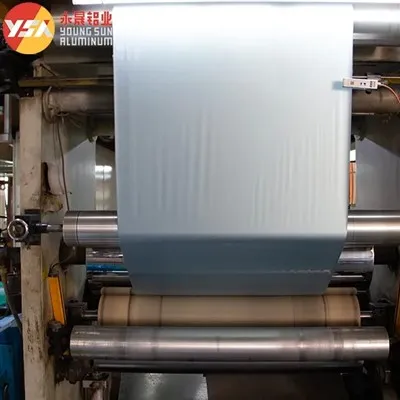
Now aluminum circles? That’s the one we specialize in at my shop. Wait, hold up – I’m not saying discs are worse, just that circles are made differently. Aluminum circles are “punched” from a larger aluminum coil, not a flat sheet. Wait, no, not just punched – it’s a process called blanking, and what makes them different is that after punching, the edge is rolled over slightly to create a smooth, rounded rim. Why? Because most of what we sell aluminum circles for needs that smooth edge. Like, if you’re making a reusable frying pan, the rough edge of a disc would cut through your non-stick coating while you’re shaping it, or even after it’s done, when you’re wiping it down. Or think of kitchen cookware – Dutch ovens, baking sheets, even the lids for saucepans. All of those use aluminum circles. The rolled edge also makes them stiffer, so they don’t bend or warp as easily when you put hot food on them. That’s a huge plus for anything that’s going to be heated.
Wait, another key difference: alloy options. I know, I know, alloy sounds like a fancy science term, but it’s just what aluminum is mixed with to make it stronger or more heat-resistant. Aluminum discs are usually made with lower-grade alloys like 1050 or 1060. Those are pure aluminum, soft, cheap, perfect for one-off disposable stuff. But aluminum circles? We use way more alloys here – 3003, 5052, even 5083 for super heavy-duty stuff. Why? Because when you’re shaping a circle into a pan or a lid, you need something that’s still malleable enough to bend, but strong enough not to crack while you’re stamping it into shape. 3003 is our go-to for most kitchen cookware – it’s durable, conducts heat evenly, and works great for stovetop or oven use. If you used a disc made of 1050 alloy for a frying pan, it would get all bent out of shape the first time you seared something in it. I’ve had customers test that – let’s just say we’ve had to replace a few pans that came from using the wrong cut.
Size matters too, but in a different way. Discs are great for small, specific sizes because you can cut them from a sheet, no matter how big or small you need them – as long as the sheet is around. But circles, because they’re punched from coils (big rolls of aluminum), they come in standard sizes most of the time. Like, we stock 6-inch, 8-inch, 10-inch, up to 24-inch circles in 3003 alloy. If you need a weird custom size, we can make it, but it’s more expensive because we have to set up the blanking machine for a new die. Discs are better for random small batches because you don’t have to wait for a custom die.
Wait, let’s talk about common use cases to make this real, because that’s what really matters. Let’s go through some examples: If you’re opening a new bakery and need a few thousand disposable tart liners – go with aluminum discs. They’re cheap, you don’t need a smooth edge for a disposable item, and they’re quick to get. But if you’re making a line of reusable stainless-aluminum hybrid baking pans? You need aluminum circles. The rolled edge is smooth so when you press the pan shape, it won’t split, and the 3003 alloy is sturdy enough to last years, not just a few uses. Another one: lids for plastic storage containers. Most people would think a disc works, but no – the smooth, rolled edge of a circle fits tighter on the container, so less food leaks out, and it’s easier to seal shut. I’ve had a customer last year who switched from discs to circles for their lids and reduced their leak complaints by 40% – that’s a big win for their business.
And let’s not forget about material thickness. Discs are usually thinner – like 0.2mm to 1mm thick – because they’re for disposable stuff. Circles? They go from 0.5mm all the way up to 10mm, depending on what you’re making. If you need a thick, heavy-duty pan that can take high heat for long periods, a thin disc just won’t cut it (pun totally intended). As an aluminum circle supplier, I get all sorts of requests – from a guy making custom camping stove burners who needs ultra-thin circles to a company making industrial cookware for restaurants who needs 8mm thick circles.
Wait, I should also address a common confusion: why do some people call them the same thing? It’s because the general term for a round piece of aluminum is often “aluminum circle” in the industry, so a lot of customers just use that for anything round, including discs. But if you’re placing a custom order, you need to specify which one you want – otherwise, you might end up with a disc that’s too thin or has a rough edge for your project. I’ve had a customer order 10,000 aluminum circles and get discs, and they had to rework all of them to get the smooth edge – that cost them a ton of time and money. Lesson learned: be specific.
Another thing: surface finish. Discs usually have a raw, mill finish – that’s the basic silver color straight from the sheet. Circles, especially the ones we sell for kitchen use, can be polished, coated, or even pre-treated to be non-stick. Because they’re going into finished products, the surface matters. You don’t want a rough metal edge scraping your non-stick coating, right? So the smooth edge from the circle process lets us add those finishes without them getting scratched.
Wait, let’s get personal for a second. I’ve been running this aluminum circle supply business out of Ohio for 10 years now, and I’ve seen every kind of mistake new buyers make. Last year, a startup company making custom pet bowls ordered 5,000 aluminum discs because they were cheaper, and they thought “it’s just a bowl, it’s round, what’s the difference?” When they got them, the rough edges scratched the glaze they put on the bowls, and all of them had to be thrown out. They came to me panicking (pun also intended) and we re-cut their order as circles, fixed the rolled edge, and saved their launch. It was a tough lesson for them, but now they’re one of our regular clients for all their new product runs.
So let’s summarize the key differences, the stuff you need to remember:
- How they’re made: Discs are cut from flat sheets; circles are punched from coils with a smoothed rolled edge.
- Edge quality: Discs have rough, shear-cut edges; circles have smooth, rounded edges.
- Alloys: Discs use soft, low-grade alloys (1050, 1060) for disposable use; circles use stronger, heat-resistant alloys (3003, 5052) for durable products.
- Thickness: Discs are thinner (0.2mm-1mm); circles are thicker (0.5mm-10mm).
- Best for: Discs = small, disposable, low-stakes items; circles = durable, reusable, heated items like cookware, lids, industrial parts.
Now, I know this sounds like a lot, but it doesn’t have to be complicated. If you’re not sure which one you need, just reach out. I’ve helped so many small business owners and hobbyists figure out the right cut for their project, no pressure. Whether you need 50 circles for a custom pan you’re making in your garage, or 50,000 for a large manufacturing run, I’ve got you. We offer custom sizes, alloy options, and even pre-finished circles if you need them right away. No hidden fees, no weird minimums (we know small projects are how startups start), just straight talk and good aluminum products.

If you’ve been mixing up circles and discs, or you’re ready to place an order for your next project, don’t hesitate to get in touch. We’ll answer all your questions, help you pick the right product, and get your order out to you fast. At the end of the day, my job isn’t just to sell aluminum – it’s to make sure your project goes off without a hitch. That’s why we’ve been around for 10 years, and that’s why we’ve got so many repeat customers. So hit me up, let’s chat through your needs, and get you the right aluminum cut for your next big thing.
Aluminum Sheet References
- Aluminum Association. (2021). Aluminum Flat Rolled Products: Technical Specifications and Applications. Retrieved from industry technical archives
- Blanking and Forming Institute. (2020). Precision Blanking Processes for Round Metal Components. Proceedings of the Annual Metalworking Conference
- Kitchenware Manufacturers Association. (2019). Material Specifications for Durable Cookware: Alloy and Geometry Requirements. Industry Best Practice GuidelinesReferences
- Aluminum Association. (2021). Aluminum Flat Rolled Products: Technical Specifications and Applications. Industry Technical Archives
- Blanking and Forming Institute. (2020). Precision Blanking Processes for Round Metal Components. Proceedings of the Annual Metalworking Conference
- Kitchenware Manufacturers Association. (2019). Material Specifications for Durable Cookware: Alloy and Geometry Requirements. Industry Best Practice Guidelines
Henan Yongsheng Aluminum Industry Co., Ltd.
We are one of the most reliable aluminum circle manufacturers and suppliers in China. With abundant experience, we warmly welcome you to buy high-grade aluminum circle for sale here from our factory. All custom made products are with high quality and competitive price.
Address: Gongyi City Industrial Cluster District, Huiguo Town, Gongyi City, Henan Province
E-mail: eric@ysaluminum.cn
WebSite: https://www.ysaluminummill.com/
