If you’ve ever worked in construction, you’ve probably seen a Topkit tower crane towering over job sites—those sleek, modular machines that lift heavy materials without needing a fixed tie-off to the building as they grow. As a Topkit tower crane supplier, I get asked this question all the time: “What’s the real maintenance cost for these things?” It’s not a number you can pull out of thin air, and it’s way more than just “fixing broken parts” — it’s a mix of regular upkeep, wear and tear, and even small surprises that pop up over time. Let me break this down like I would to a new customer who’s just checking out their first crane rental or purchase. Topkit Tower Crane
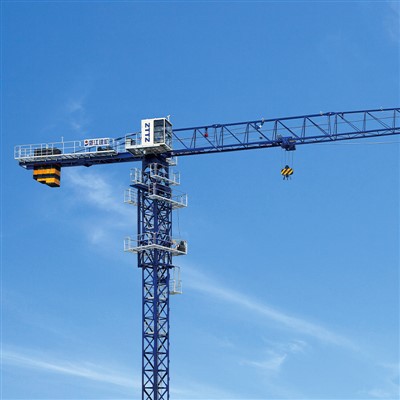
First, let’s start with the basics: Topkit cranes are different from traditional hammerhead cranes. Their modular design means you can add or remove sections as a building grows, which is super convenient, but that design also affects maintenance costs. For example, the top section (where the jib connects to the tower) has less moving parts than a hammerhead, but those parts are still exposed to wind, dust, and rain—big factors in places like the Middle East or coastal areas. So maintenance isn’t one-size-fits-all; it depends on where your crane’s working, how often it’s used, and how well the operator treats it.
Let’s split maintenance into two main categories: routine scheduled maintenance and unplanned repairs. Routine stuff is non-negotiable if you want your crane to last, and it makes up about 60% of total maintenance costs, in my experience. Unplanned repairs are the wild card, but we can estimate those based on usage. Let’s talk routine first.
Routine maintenance usually happens monthly, quarterly, and annually. Monthly checks are the most frequent and the cheapest. This includes things like inspecting the wire rope for frays, checking the hydraulic fluid levels, tightening loose bolts on the jib and tower sections, and testing the safety brakes. For a standard 6-ton Topkit crane, a monthly service visit from a certified technician costs between $150 and $250. Why the range? If your job site is in a remote area, travel fees add up—we had a customer last year in a desert job site 2 hours outside Riyadh, and the monthly service cost jumped $100 just for the tech to drive out there. Also, if your operator is extra careful and reports small issues before they get big, you might only need a quick 30-minute check, which is on the lower end. If the tech has to replace a worn bolt on the spot, that’s a $20-$50 add-on, but usually, monthly checks are just labor.
Quarterly maintenance is a bit more involved. It’s when we do deeper inspections: checking the gearbox oil in the trolley mechanism, testing the overload protection system (super important for safety), greasing all the pivot points on the jib, and inspecting the tower’s base for any cracks or shifting. Quarterly service for the same 6-ton crane runs $400 to $700. Again, location plays a part—if the site is muddy (like a wet construction area in Southeast Asia), the base inspection takes longer because the tech has to dig around the foundation a bit to check for corrosion. Also, if we find that the trolley’s gears are a bit dry, we might need to add more grease, which is a $30-$60 part cost. For larger Topkit cranes, like 10-ton models, these numbers go up by about 30% because the parts are bigger and take more time to inspect.
Annual maintenance is the big one—this is the full safety and performance check that’s often required by local construction regulations, depending on where you’re based. It includes a full load test (lifting 110% of the crane’s maximum capacity to make sure it’s still stable), replacing worn wire ropes (which can last 1-3 years, but that’s a big-ticket item), inspecting the electrical control panel for loose wiring, and re-calibrating all the safety sensors. An annual service for a 6-ton Topkit crane is usually $1,200 to $2,000. Here’s where costs can spike: wire ropes alone for a 6-ton crane are $800 to $1,500, depending on the length and quality. If your crane has been working in a dusty area, the electrical panel might have built-up dust that causes short circuits, so cleaning and replacing a few wiring harnesses can add another $200-$400. For larger 10-ton cranes, the annual check can be $2,000 to $3,500, mostly because the wire rope is longer and more expensive, and the load test requires more setup.
Now, unplanned repairs—this is the part most customers don’t budget for, and it’s where a lot of people get stuck. How much should you set aside for unexpected fixes? For a well-maintained Topkit crane, unplanned repairs should be around 10-15% of the total routine maintenance cost per year. Wait, let’s put that in numbers: if you’re spending $2,000 a year on routine maintenance, that’s $200-$300 for unplanned stuff. But that’s only if you’re keeping up with routine checks. If you skip a few months of monthly service, that number can jump to 25% or more. Common unplanned issues we see are: wire rope fraying from not being lubricated, brake pads wearing out faster because the operator is too hard on the controls, and small cracks in the tower sections from being lifted and set up roughly. For example, a set of brake pads for a 6-ton crane is $150, but if you wait too long to replace them, you might damage the brake drum, which is $500 to fix. Another big one: the slewing ring (the part that lets the crane turn) can get damaged if it’s not greased regularly. Replacing a slewing ring for a 6-ton crane is $1,000 to $1,800, and that’s a 4-hour job for two techs, so labor adds another $800-$1,200. That’s a huge hit, which is why emphasizing routine grease checks is non-negotiable.
Wait, let’s also talk about factors that can make maintenance costs higher or lower. First, crane usage: if your crane is working 24/7 on a high-rise project in a busy city, parts will wear out faster. A crane that’s only used part-time on small residential projects will have lower maintenance costs—maybe 20% less over a year. Second, location: salt air in coastal areas is a nightmare for corrosion. We had a customer in Miami whose crane needed the tower sections sandblasted and painted every two years, which added $1,500 to $2,500 to their maintenance cost. Inland, dry areas don’t have that issue, so paint jobs are only needed every 5 years or so. Third, operator training: this is a big one. Operators who take time to do pre-start checks, avoid sudden stops, and follow load limits will extend the life of parts by 30% or more. We once had an operator who would slam the load down every time, and his crane went through three sets of wire ropes in a year, while a neighboring crane with a trained operator went through one. That’s a massive difference.
Another thing to consider: if you’re renting vs. buying a crane. Most rental companies include routine maintenance in their monthly rate, which is convenient, but you might pay a bit more for that. If you own the crane, you’re responsible for all maintenance, but you can also choose cheaper parts or do some small checks yourself (as long as you’re certified). Wait, but I always tell customers: don’t skip certified techs for small jobs. Cutting corners on a monthly check to save $100 could lead to a $10,000 repair later. I’ve seen it happen too many times— a customer in Dubai skipped a monthly bolt check, a loose jib section shifted, and damaged the trolley, which cost $8,000 to fix and put their project on hold for two weeks. That’s way worse than paying the $200 for a monthly service.
Let’s put all this together for a real-world example. Let’s say you have a 6-ton Topkit crane, used 5 days a week on a mid-rise project in a non-coastal, inland area. Your annual routine maintenance would be: 12 monthly checks ($200 avg) = $2,400, 4 quarterly checks ($550 avg) = $2,200, 1 annual check ($1,600 avg) = $1,600. Total routine: $6,200. Unplanned repairs: $620 (10% of routine). Total annual maintenance cost: around $6,820. That’s for a well-cared-for crane with no major surprises. If the crane is working 7 days a week in a dusty area, add 20% to that—so $8,184. If it’s in a coastal area, add another 15% for corrosion protection—about $9,400. For a 10-ton crane in the same inland mid-rise spot, it’s closer to $9,500 a year, because parts are bigger and service takes longer.
Wait, but is that all? What about insurance? No, maintenance is separate from insurance, but some maintenance costs are tax-deductible if you own the crane. Also, if you’re working in a country with strict safety regulations, like Germany or Singapore, you might have to spend a bit more on inspections to comply with local laws, which can add 10-15% to annual costs. But in most places, the numbers I mentioned are pretty accurate.
I should also mention that Topkit cranes have a big advantage over other crane types when it comes to maintenance: their modular design means replacement parts are easier to find and cheaper. A few years ago, when demand for Topkit cranes boomed, some generic parts became available, which helped bring down costs. Unlike older tower cranes, where you have to wait weeks for a custom part, Topkit parts are stocked at most suppliers, so if a part needs replacing, it’s usually a same-day or next-day fix. That’s a huge plus for job sites that can’t afford downtime.
Now, common mistakes customers make when budgeting for maintenance: first, underestimating unplanned costs. As I said, if you only budget for routine, you’ll get blindsided by a broken brake or a frayed wire rope. Second, choosing the cheapest service provider. I’ve had customers come to me after using a discount tech who did a bad job—they tightened bolts too loosely, missed a wire rope fray, and ended up with a big repair. It’s worth paying a certified tech who knows Topkit cranes specifically, not just any crane. Third, skipping regular maintenance to save money in the short term. That’s like skipping oil changes in your car—you might save $50 now, but you’ll ruin the engine and pay thousands later.

At the end of the day, the maintenance cost for a Topkit tower crane isn’t a fixed number, but it’s predictable if you plan for routine checks, budget a little extra for unplanned repairs, and invest in a good operator. If you’re in the market for a Topkit crane—whether to rent or buy—and want a more personalized breakdown based on your job site, location, and usage, feel free to reach out to our team. We’ll walk you through exactly what to expect, no hidden fees, just straight talk about what it takes to keep your crane running safely and efficiently.
Flat Top Crane References:
- International Organization for Standardization (ISO) 12480-1:2015, Cranes – Safe use – Part 1: General
- Construction Industry Institute (CII) Report 350-10, Tower Crane Maintenance and Safety Best Practices
- Topkit Tower Crane Manufacturers Association, 2023 Global Maintenance Cost Benchmark Report
- Occupational Safety and Health Administration (OSHA) 1926.550, Cranes and Derricks in Construction
Zhejiang Construction Engineering Machinery Co., Ltd.
Zhejiang Construction Engineering Machinery Co., Ltd. is well-known as one of the leading topkit tower crane manufacturers and suppliers in China. If you’re going to buy high quality topkit tower crane made in China, welcome to get more information from our factory.
Address: A/F, Lianjin Building, 175 Zhaohui Road, Hangzhou, Zhejiang, China
E-mail: zjcmsale2@zjjj.com.cn
WebSite: https://www.zjcmcranes.com/
