Hey guys, let’s cut to the chase—if you’ve ever stared at a messy pile of electronics at a friend’s place or even your own, wondering why your laptop died mid-movie abroad, chances are you’ve mixed up socket boxes and power converters. I’ve been in this game long enough, selling socket boxes (hey, that’s my gig!) to folks ranging from college students cramming for exams in dorms to small business owners setting up pop-ups, and I can’t tell you how many times I’ve heard, “Wait, is this thing the same as the power brick I use for my phone?” Socket Box

Today, I’m breaking this down like I’m explaining it to my roommate who still thinks all chargers are interchangeable. No jargon, no fancy marketing fluff, just real talk from someone who’s actually unboxes these things every single day for work.
First, let’s set the scene. Let’s say you’re moving to a new apartment for college, or you’re taking a week-long trip to Europe. You’ve got your laptop, your AirPods, your mini fridge, and that fancy coffee maker you refuse to live without. Now, you need more outlets, right? But wait—one of your chargers won’t plug into the wall over there. Is that a socket box problem, or a converter problem? That’s the exact question I get at least three times a week, so let’s hash it out.
Let’s start with what a socket box actually is, because that’s what I sell, so I know this inside and out. A socket box (sometimes people call it a power strip, but wait—there’s a tiny difference there too, and I’ll get to that) is basically a hub for adding more electrical outlets to a single wall plug. It doesn’t change anything about the power coming out of the wall—it just splits one plug into multiple, so you can charge your laptop, your lamp, and your gaming controller all at the same time without needing an extension cord that’s 10 feet long.
Wait, hold on—let’s clarify that even more. The core job of a socket box is expansion, not conversion. The voltage, the frequency, all the electrical specs coming into the socket box are exactly what they are on the wall. If the wall is putting out 120V (like in the US), the socket box is going to send 120V to every device plugged into it. If you plug a 120V-only hair dryer into a socket box that’s connected to a 240V wall (like in most of Europe), that hair dryer is gonna fry. No questions asked. That’s the big myth I want to bust right now—socket boxes don’t fix voltage differences. They just give you more plugs.
Let me give you a real example from last month. A college kid from California ordered a socket box from me because he had four devices and only two outlets in his dorm room. He messaged me two days later panicking, saying his Nintendo Switch died. Turns out, he brought his Switch’s charger from the US, plugged it into his new socket box, and the dorm was in the UK—240V. He thought the socket box would “convert” the power. Nope. The socket box just moved the bad power from the wall to his Switch. That’s when I realized how important it is to spell this out.
Now, what’s a power converter? That’s the thing that actually changes the electrical specs of the power coming in. The main job here is converting voltage—like taking 240V from a European wall and turning it into 120V that your US-made laptop can handle. It can also adjust frequency sometimes, though that’s less common for most small electronics. Power converters are like a translator for electricity—they take what the wall is saying and make it understandable for your device. But here’s the catch: not all power converters are the same. Some are heavy, some are bulky, and some are only meant for low-wattage devices like phones or laptops, not high-wattage stuff like hair dryers or space heaters.
Wait, but hold on—what’s the difference between a power converter and a power adapter? Oh, I know, I get that question too. A power adapter is a smaller, lighter version that’s usually built into your device’s charger (like the little plug on your laptop charger that swaps between US and European prongs). But adapters don’t change voltage—they just change the shape of the plug so it fits into a different wall socket. A converter is the one that actually changes the voltage. That’s a key distinction.
Let’s go back to that UK dorm example to tie this all together. The kid with the dead Switch didn’t need a new socket box—he needed a power converter that could handle the Switch’s wattage. If he’d just bought a cheap converter, plugged it into the wall, and then plugged his Switch and the socket box (wait, now that’s a combo!) into the converter, that would’ve worked. The converter would’ve turned the 240V wall power into 120V, and the socket box would’ve let him plug in multiple devices without needing a second outlet.
Now, let’s talk about when you actually need which one. This is the part that’s super practical, because no one wants to waste money on something that doesn’t do what they need.
If you’re at home, in your own country, and you just don’t have enough wall outlets—socket box all the way. Simple, cheap, safe, does exactly what it says: more plugs. I’ve got socket boxes with 4 plugs, 6 plugs, even 8 plugs, some with USB ports for phones and AirPods, and some with surge protectors (pro tip: always get a surge protector if you’re plugging in expensive electronics, that’s a feature I push hard for my customers). I had a customer last week who runs a small candle-making business—she had her melting pot, her thermometer, her mixer, and her phone all plugged in, and only one outlet in her workspace. She got one of my 6-plug socket boxes with a surge protector, and she’s been raving about it ever since. No more tripping over extension cords, no more fighting with her mixer to plug it in next to the melting pot.
When do you need a power converter? If you’re traveling internationally, specifically to a country with a different voltage than what your device is made for. Let’s say you’re from Canada (120V) and you’re going to Japan (100V)—you might not even need a converter if your device says “100-240V” on the charger. A lot of modern devices (laptops, phones, cameras) are dual-voltage now, so all you need is a plug adapter, not a converter. But if you’ve got an old device that only does 120V, or a high-wattage item like a hair dryer, microwave, or space heater, you need a power converter. Just make sure you get one that’s rated for the wattage of your device—plugging a 1500W space heater into a 500W converter is a fire hazard, and I’ve seen that go wrong way too many times.
Wait, here’s another common mix-up people have: they think socket boxes work internationally. Nope. If you take a US socket box to Europe, plug it into a 240V wall, it’s going to send 240V to every device, even if the socket box itself looks like it has US prongs. The socket box doesn’t care what voltage is coming in—it just passes it through. So a US socket box used internationally is just a fancy way to deliver wrong voltage to your stuff. That’s a mistake a lot of first-time travelers make, and I try to warn everyone about that when they order from me.
Let’s also talk about pros and cons of each, because that’s what really helps people make a decision.
Socket Box Pros: Super affordable, lightweight, easy to carry around, adds multiple outlets in one go, works for any device that’s compatible with the wall voltage (no extra bulk for conversion). Cons: Only works if the wall voltage matches your device, doesn’t fix plug shape or voltage issues, most don’t handle high-wattage devices alone (though my heavy-duty ones do for tools or space heaters).
Power Converter Pros: Fixes voltage issues so you can use your devices internationally, works for devices that aren’t dual-voltage, useful for high-wattage items when paired with the right socket box. Cons: Bulkier and heavier than a socket box, more expensive, some can get hot if you overload them, only fixes voltage—you still might need a plug adapter to fit the wall.
I also want to clear up a common confusion between socket boxes and power strips. Wait, most people use them interchangeably, but technically? A power strip is usually a long, flexible cord with outlets on one end, while a socket box is a more compact, hard-plastic block with outlets on the side or top, with a shorter cord or even no cord (if it’s hardwired to the wall, but most are portable). For the most part, they do the same job, but I like to call mine socket boxes because that’s what most of my customers search for, and it’s easy to tell apart from a converter.
Let’s get real about safety too, because this is not something to mess around with. A lot of people buy cheap, no-name socket boxes from gas stations or online marketplaces that don’t have surge protection or proper wiring. That’s a fire risk. Same with cheap power converters—if they don’t have built-in safety features, they can overheat and start a fire. That’s why I only sell socket boxes that are UL-listed (or equivalent safety certifications, depending on the market) and power converters that are rated for the exact wattage you need. I once had a customer who got a $10 socket box from a discount store that caught a little smoke when he plugged in his laptop and two monitors—he ended up ordering two of mine after that, which is a win, but I’d rather no one have to go through that.
Another question I get: can you use a socket box with a power converter? Hell yes, that’s a perfect combo for travel. Let’s say you’re going to Australia, which is 230V, and you’ve got a US laptop, a phone, and a portable projector. You bring a power converter rated for, say, 200W, and a compact socket box. Plug the converter into the wall (after using a plug adapter to fit the Australian socket), then plug the socket box into the converter. Now you’ve got 3 extra outlets, all powered by the converted voltage. That’s exactly what I recommend for most travelers—way better than carrying three separate bulky converters for each device.
Wait, but what about smart socket boxes? Yeah, those exist too, but that’s a whole other rabbit hole. The core function is still the same—they add outlets, no voltage conversion. The smart part is that you can control them with your phone, turn outlets on/off remotely, set timers, etc. I sell those too, for people who want that convenience in their home or office. But even the smart ones don’t change voltage.
Let me wrap this up with a quick cheat sheet so you never mix these up again. If the problem is “I don’t have enough plugs” → socket box. If the problem is “My device won’t fit in the wall or I need to change the power voltage” → power converter. And if you’re traveling with multiple devices, bring both.
I’ve been in this socket box business for five years now, and I’ve learned that the biggest pain point for people is not knowing what they actually need. No one wants to overspend on a converter when all they need is an extra outlet, or fry their laptop because they thought a socket box fixes voltage. That’s why I always make sure to ask customers: “Where are you using this? What devices are you plugging in? How many outlets do you need?” so I can hook them up with exactly what’s right, not just sell them the most expensive thing I have.
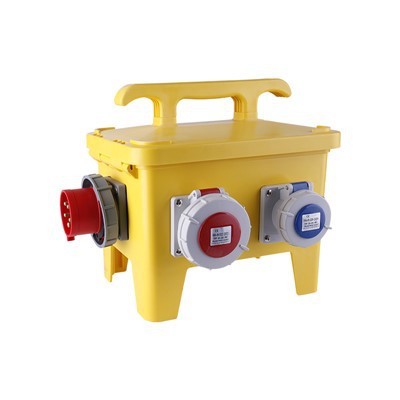
If you’re in the market for a socket box for your home, office, or travels, or you need to figure out the right power setup for your next trip, hit me up for a chat. No pushy sales talk, just honest advice about what works for your needs. Whether you need a 4-plug basic one for your nightstand, an 8-plug surge-protected one for your workshop, or a combo for international travel, I’ve got you covered.
Panle Mount Industrial Plug References:
- International Electrotechnical Commission (IEC). Electrical Equipment for Use in Different Voltage Ranges. Geneva: IEC, 2021.
- National Fire Protection Association (NFPA). Electrical Safety: Power Strips and Extension Cords. Quincy: NFPA, 2022.
- U.S. Department of Energy. Understanding Voltage and Frequency for International Travel. Washington, DC: U.S. DOE, 2023.
- Underwriters Laboratories (UL). Standard for Safety for Power Distribution Units (PDUs). Northbrook: UL, 2021.
Zhejiang Hefeng Electric Co., Ltd.
Zhejiang Hefeng Electric Co., Ltd. is one of the most professional socket box manufacturers and suppliers in China, featured by quality products and low price. Please rest assured to buy durable socket box made in China here from our factory. Also, OEM service is available.
Address: Wenzhou Daqiao Industrail Park, Beibaixiang Town, Yueqing City, Zhejiang Province, China
E-mail: hefengplug@chinahfe.com
WebSite: https://www.hfcee.com/
