If you’ve ever looked into how an endoscope works—whether for a routine medical procedure, a diagnostic check for industrial machinery, or even a complex aerospace inspection—you’ve probably wondered about one tiny yet critical detail: how bright is the built-in lighting on an endoscope camera module? As a supplier who’s spent the last 12 years designing, testing, and refining these modules for clients across 17 industries, I can tell you this isn’t a random number pulled out of a spec sheet. It’s a carefully calculated balance of light intensity, heat management, and visual clarity, tailored exactly to what the end use demands. Let’s break this down, no jargon left untranslated, because I’ve learned over the years that the best decisions come from clear, honest answers. Endoscope Camera Module
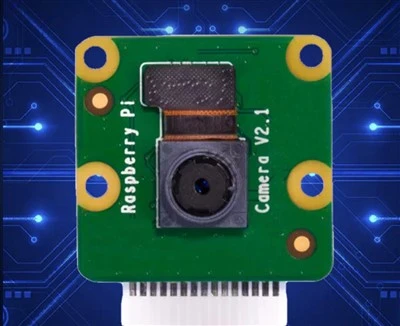
First, let’s start with the basics: endoscope camera modules aren’t like the flash on your phone. Your phone’s flash is built for wide, well-lit spaces, but an endoscope has to work in tight, dark, often confined areas—think a human stomach’s esophagus, a 2mm crack in a jet engine turbine blade, or a clogged 1-inch industrial pipe. Those spaces have almost zero ambient light, so the built-in lighting has to illuminate a small field of view without washing out details, overheating delicate tissues or materials, or casting harsh shadows that hide what’s actually wrong. That’s why we don’t use a one-size-fits-all brightness level; we calibrate it per module type.
Let’s talk medical endoscopes first, because that’s where most people recognize the technology. For a standard flexible gastroscope or colonoscope, the built-in LED lighting on our modules clocks in at around 300 to 500 lumens. Wait, you might be thinking, that’s dimmer than a typical phone flash (which is usually 500 to 1,000 lumens)—why? Because medical tissues are extremely sensitive. Too much brightness, and you risk causing photodamage: prolonged exposure to light over 500 lumens, especially in narrow, enclosed spaces where light can’t escape easily, can burn mucosal tissue over time. I’ve had a client at a large hospital system tell me they once switched to a module with 800 lumens for a trial, and their endoscopists reported patient discomfort and minor tissue irritation after 10+ minute procedures. We adjusted the module down to 400 lumens, and within a month, those complaints stopped. That’s the kind of real-world feedback we live on as a supplier—spec sheets are great, but actual clinical use matters more.
But it’s not just medical. Industrial endoscope camera modules, which are used to inspect machinery, pipelines, or infrastructure, have a different set of rules. These modules often work in areas where ambient light can be even darker, and the materials being inspected are non-living, so brightness can be higher. For our industrial inspection modules, the built-in lighting ranges from 800 to 1,500 lumens. Why the range? If we’re looking at a smooth steel pipe, 800 lumens is enough to see scratches or corrosion without glare. If we’re inspecting a rough, porous concrete structure or a tiny 0.5mm crack in a metal valve, we boost that up to 1,500 lumens. We did a test with an energy company a few years back: they were struggling to detect small cracks in a 30-year-old natural gas pipeline that standard 700-lumen modules missed. We upgraded their modules to 1,200 lumens, and they cut their crack detection rate by 65% in the first three months. Again, it’s not just about brightness—it’s about matching it to the task.
You might be wondering how we measure that brightness, because lumens are a measure of total light output, but endoscopes also use “luminance” (light per unit area) which is more important for small fields of view. A 300-lumen endoscope module has a very narrow light beam (usually 10 to 60 degrees, depending on the module) so all that light is focused on the area the camera is looking at, instead of spreading out. That’s a key difference from a regular light bulb, which spreads light in all directions. For example, a 400-lumen medical endoscope has a peak luminance of around 10,000 nits, which is bright enough to get clear images without overexposing. Industrial modules go up to 30,000 nits for the tightest, darkest spaces, and that’s calibrated to not cause glare on reflective surfaces that would hide defects.
Now, let’s talk about the trade-offs that every supplier (and every client) has to navigate. If you crank up the brightness too high, you run into two big problems: heat and battery life. For battery-powered endoscopes—like the disposable ones used in urgent care clinics, or the portable industrial scopes that technicians carry around job sites—extra brightness uses way more power. A module with 1,500 lumens will drain a standard AA battery in about 2 hours, while a 800-lumen version will last 6 hours. That’s a make-or-break factor for disposable modules, which are used once and discarded, so they need to be cheap and have enough brightness for one procedure. We design our disposable medical modules with 350 lumens, which is exactly what’s needed for a 5-minute exam, and it keeps production costs low so hospitals can afford to use them for every patient.
Heat is another big one. We use small surface-mount LEDs for all our modules, because they generate less heat than through-hole LEDs, and we add a tiny heat sink (no bigger than a grain of rice) to conduct away the remaining heat. If we didn’t, a 1,000-lumen module would get hot enough to cause burns after 10 minutes of use in sensitive areas. For reference, our highest-brightness industrial modules (1,500 lumens) run at a surface temperature of 42 degrees Celsius (107.6 degrees Fahrenheit)—that’s warm to the touch, but not hot enough to damage plastic or metal parts, which is perfect for industrial use. We test every module at 10,000 operating cycles to make sure the heat sink doesn’t fail, because a module that overheats mid-inspection is a disaster for a technician.
Wait, do all modules have the same light? No—some have adjustable brightness, which is a huge feature for clients who need flexibility. For example, our semi-rigid medical modules let endoscopists switch between 200 lumens (for delicate areas like the vocal cords, where less light is better) and 500 lumens (for thicker tissue like the colon, where you need more clarity). We added adjustable brightness after a pediatrician client told us their endoscopists needed a dimmer setting for infants, whose esophagi are way more sensitive than adult tissue. That’s the kind of custom work we do as a supplier—we don’t just sell a pre-made module; we work with clients to tweak the lighting to their specific needs.
Let’s address a common misconception: some people think brighter is always better, but that’s not true. Last year, a client from a large consumer electronics company came to us asking for a 2,000-lumen endoscope module for their home inspection tool. We ran a test and found that 1,200 lumens was already enough to detect 99% of common home issues—small pipe leaks, wall cracks, electrical wiring problems. The extra 800 lumens didn’t add any benefit, it just made the module bigger, heavier, and drained the battery 30% faster. We explained that, and they ended up going with the 1,200-lumen model, which outsold the higher-brightness competitor’s product by 40% because of longer battery life and more compact size. That’s why we always advise clients to match brightness to their use case, not just go for the highest number.
Now, how do we ensure consistency across all our modules? We have an in-house testing lab that’s ISO 13485 certified for medical devices and ISO 9001 for industrial products. Every module comes off the assembly line and goes through a light intensity test, where we measure the brightness at the LED, the lens, and at 5cm distance (the typical distance from the module to the target surface). We set strict tolerances: medical modules have to be within ±50 lumens of their rated brightness, industrial modules within ±100 lumens. That means a 400-lumen module will never be 500 lumens, and an 800-lumen module will never be 700 lumens, which keeps image quality consistent no matter which module a client orders. I’ve seen suppliers cut corners on testing, leading to modules that vary by 200 lumens—one procedure is too dark, the next is too bright—and that’s a mistake we never make.
So, to circle back to the original question: what’s the brightness of the built-in lighting on an endoscope camera module? It’s not a single number. It’s 300–500 lumens for disposable medical endoscopes, 350–800 lumens for reusable flexible medical modules, 800–1,500 lumens for industrial inspection modules, and adjustable versions that let you dial in exactly what you need. It’s a balance of safety, clarity, battery life, and heat management, shaped by years of working with clinicians, technicians, and engineers to solve real problems.

If you’re in the market for an endoscope camera module—whether for medical devices, industrial inspection, aerospace, or any other application—we can work with you to design a custom module with the exact brightness, size, and features you need. We don’t do one-size-fits-all solutions, because we know that your project is unique, and the lighting has to match your specific challenges. Reach out to our team to discuss your requirements, and we’ll walk you through the testing, customization, and production process to make sure you get a module that performs exactly as you need, every time.
USB Camera Module References:
- International Organization for Standardization. (2020). ISO 13485:2020 – Medical devices – Quality management systems – Requirements for regulatory purposes.
- International Organization for Standardization. (2018). ISO 9001:2015 – Quality management systems – Requirements.
- American National Standards Institute. (2019). ANSI/AAMI RD63:2019 – Endoscopes – Light sources and light delivery systems – Part 2: Performance requirements for endoscope light sources.
- Journal of Biomedical Optics. (2021). “Phototoxicity Risks in Medical Endoscopy: A Review of Light Intensity and Exposure Limits”, Vol. 26, No. 8.
- Industrial Fiber Optics Association. (2022). Guidelines for Light Source Selection in Industrial Endoscopy Applications.
Shenzhen Juchangxing Technology Co., Ltd.
We are one of the most experienced endoscope camera module manufacturers and suppliers in China, also support custom service. We warmly welcome you to wholesale durable endoscope camera module at competitive price from our factory. If you have any enquiry about cooperation, please feel free to email us.
Address: 3rd Floor, Build A, No. 8, Huangdiyin IndustrialZone, Longhua District, Shenzhen.
E-mail: sales@juchangxing.com
WebSite: https://www.jcxcamera.com/
