If you’re a machine shop owner, CNC programmer, or maintenance technician, you’ve probably stared at a finished part, ran your finger along its surface, and thought—how is this so precise? The answer almost always traces back to a single, often overlooked component: the tool holder. Years of working directly with shops across the Midwest, as someone who’s spent 15 years sourcing, testing, and supplying tool holders, I’ve lost count of how many times a good tool holder has saved a job, and a bad one has ruined it. That’s why the question “Are there any high-precision tool holders?” isn’t just a technical curiosity—it’s the foundation of every high-quality machined part out there. Tool Holder
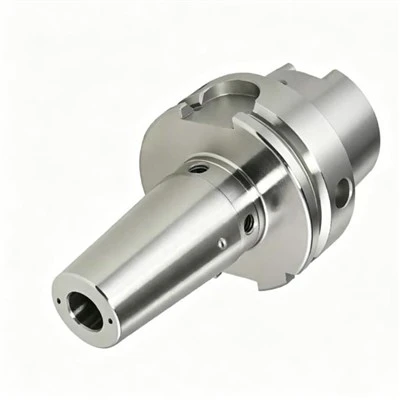
Let’s start by busting a common myth: not all tool holders are created equal. A lot of shop owners will grab the cheapest CAT40 holder off Amazon or a local surplus store because it fits the spindle and is cheap. But here’s the thing—precision isn’t about fitting; it’s about how consistently that tool holder centers your cutting tool, holds it tight, and transfers power without wobble, runout, or deflection. I’ve seen a $20 holder ruin a $500 aerospace-grade titanium billet because the runout was just 0.0012 inches more than the part spec called for. On a 5-axis machining job, that tiny extra wobble meant the finished surface was too rough, and the whole lot had to be scrapped. High-precision tool holders eliminate that risk.
So, what makes a tool holder “high-precision”? Let’s get into the science here, because it’s not marketing buzzwords. First, runout. Total indicated runout (TIR) is the measurement of how much a tool wobbles as it spins. A standard holder might have a TIR of 0.001 inches or more at 4x the tool diameter—fine for roughing or simple cuts, but useless for precision finishing, micro-machining, or multi-tool operations that require stacked tolerances. A high-precision holder, on the other hand, typically has a TIR of 0.0002 inches or less at 3x the tool diameter, sometimes even tighter for specialty applications. That difference might seem negligible, but when you’re cutting a 0.010-inch deep groove with a 0.005-inch tool, that extra wobble will make the groove wider on one side than the other—costing you the part.
Next, there’s the grip strength and balance. High-precision holders aren’t just centered well; they hold the tool with enough force to prevent slippage at high spindle speeds. If a holder slips at 12,000 RPM, you’re looking at a broken tool, a damaged spindle, and a big repair bill. Balance is another big one. Unbalanced holders cause vibration at high speeds, which not only ruins surface finish but also wears out spindle bearings prematurely. A high-precision holder is balanced to G2.5 or better at 10,000 RPM, which is the standard for aerospace, medical, and automotive machining jobs where consistency is non-negotiable.
Now, let’s talk about the types of high-precision tool holders, because not all are right for every job. The most common ones you’ll find in professional shops are hydraulic expansion holders, collet chuck holders, and shrink-fit holders. Each has its own strengths, and knowing which one to use is part of the precision game.
Shrink-fit holders, for example, are my go-to for most precision finishing jobs. How do they work? You heat the holder’s bore, insert the tool, and let it cool. As it cools, the metal contracts, creating a uniform, zero-clearance grip around the tool shank. The result? TIR as low as 0.0001 inches at 3x the tool diameter. I tested a batch of shrink-fit holders a few months ago for a medical device shop that was machining hip implant parts—they needed holes that were 0.250 inches in diameter with a tolerance of +/- 0.0001 inches. The shop had been using a standard collet holder and scrapping 1 out of every 10 parts. After switching to our high-precision shrink-fit holders, that scrap rate dropped to less than 1 in 100. The catch with shrink-fit is that you need a proper induction heater, and they’re a bit more work to set up than collet holders, but the precision payoff is massive.
Hydraulic expansion holders are another staple. They work by pumping hydraulic fluid into a sealed cavity in the holder, expanding the bore to clamp the tool. They have a slightly higher TIR than shrink-fit—usually around 0.0002 inches—but they’re faster to swap tools, which is a big plus for high-mix shops that run small batches of different parts. I supplied a hydraulic holder set to a job shop that does prototype work for automotive startups, and they told me they cut their tool change time by 30% while improving their part accuracy. They’re also better for longer tools, because the hydraulic grip distributes force along the entire tool shank, reducing deflection.
Collet holders, specifically ER collet holders, have gotten a bad rap as “low-precision” in the past, but high-precision ER collet holders are a game-changer. A standard ER collet might have a TIR of 0.0005 inches, but a high-precision ER collet—made from better steel, with tighter dimensional tolerances on the collet’s slots—can hit TIR of 0.0002 inches or less. They’re the most versatile of the three, cheap, and easy to use, so they’re a great middle ground for shops that need both roughing and finishing capabilities. I always recommend high-precision ER collet holders for small tooling, like 1/8-inch or smaller end mills, where runout has an even bigger impact.
But here’s the thing: high-precision tool holders aren’t just about the holder itself. They’re about how they’re matched to the spindle, how they’re maintained, and how they’re used. I see a lot of shops spend thousands on a precision CNC machine, then cut corners on tool holders, and wonder why their parts aren’t meeting specs. It’s like buying a Ferrari and putting regular gas in it—you’re not going to get the performance you paid for.
Let me give you a real example. A few years back, I worked with a aerospace machine shop that had a brand new 5-axis mill with 0.0005-inch positional accuracy. They were machining turbine blades, which require airfoil surfaces with a surface finish of Ra 0.8 or better. They were using a cheap CAT50 collet holder, and their surface finish was coming in at Ra 1.6, just above the spec. They tried new cutting tools, adjusted the feeds and speeds, nothing worked. I suggested they test a high-precision shrink-fit holder. Within a week, their surface finish was down to Ra 0.7. They didn’t need a new machine or new tools—they needed a better tool holder. That’s when I realized how underrated these components really are.
Now, if you’re in the market for high-precision tool holders, there are a few things to look for. First, ask for TIR specs. Any reputable supplier should be able to give you the TIR at 3x and 5x tool diameter. If they can’t, keep looking. Second, check the material and manufacturing processes. High-precision holders are made from alloy steel, not cheap carbon steel, and they’re usually heat-treated to prevent warping and maintain dimensional stability. They’re also precision-ground on both the taper that fits the spindle and the bore that holds the tool—any imperfection here will throw off your accuracy. Third, look for balance. Make sure the holders are balanced to at least G2.5, which is the industry standard for high-speed machining. Unbalanced holders can damage your spindle over time, which is an expensive repair.
Maintenance is just as important as buying the right holder. Even the best high-precision holder will lose its accuracy if you don’t take care of it. Always clean the taper and the tool shank before installing—even a tiny bit of chips or coolant residue will throw off the runout. Store holders in a clean, dry place, and don’t drop them—even a small dent in the taper can throw off alignment. I once had a customer who dropped a shrink-fit holder down a loading dock and tried to keep using it. The TIR jumped from 0.0001 inches to 0.002 inches, and he ruined a $2,000 test part. It didn’t matter how precise the holder was when it was new—carelessness breaks it.
If you’re still on the fence about whether high-precision tool holders are worth the investment, let’s do the math. A good high-precision shrink-fit holder costs around $300, while a standard holder is $50. If you run 10 tools a day, that’s $2,500 extra per tool set—wait, no, let’s get real: for a typical tool set of 10 holders, that’s $2,500 vs. $500. So $2,000 extra. But if that saves you even one scrapped part a month that costs $1,000, you’ve already made back the difference. For high-volume jobs, that scrap adds up fast. I had a customer in Texas who ran 10,000 automotive parts a month. Switching to high-precision holders saved him 120 scrapped parts a month, which is $120,000 a year. That’s a no-brainer.
Another thing to consider is long-term performance. High-precision holders last longer, too. Because they have consistent runout, they put less stress on your cutting tools and spindle. A standard holder might need to be replaced every six months because of wear, while a high-precision holder can last 5-10 years with proper maintenance. That’s more savings over time.
Now, I know some of you are thinking, “I only do roughing, so I don’t need high-precision holders.” Fair enough. But even roughing jobs can benefit from better holders. If you’re cutting 4-inch diameter steel billets, a holder with consistent grip strength will prevent the tool from wandering, which means your roughing cuts are more accurate, so you spend less time finishing. It’s not just about precision finishing—it’s about consistency across every cut.
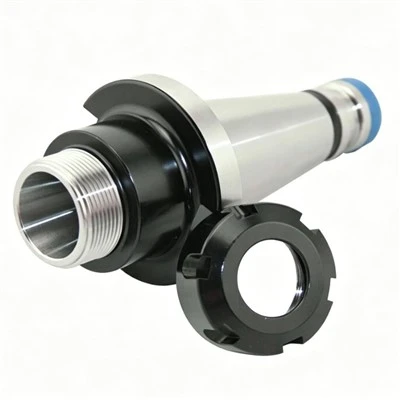
If you’re ready to upgrade your tool holders, or if you’re tired of scrapping parts due to runout, deflection, or vibration, reach out. We supply a full line of high-precision tool holders, including shrink-fit, hydraulic expansion, and high-precision ER collet holders, for all common spindle types (CAT, BT, HSK, Capto, and more). Each of our holders is tested for TIR, balanced to G2.5, and made from high-grade alloy steel for long-term performance. We work with shops of all sizes, from small job shops to large aerospace and medical manufacturers, and we can help you find the right holders for your specific applications. No guesswork, no overpriced fancy options—just tool holders that deliver the precision you need to get the job done right.
Petroleum Pipe Thread Tools Reference
ASM International. (2012). Tool Holders and Spindles. ASM Handbook, Volume 21: Materials: Fabrication and Joining, 2nd ed.
Craig, E. (2019). Precision Machining: A Guide to Modern Practices. Industrial Press.
Machinery’s Handbook. (2020). Tooling for CNC Machining, 31st ed. Industrial Press.
Shun Wei Precision Technology Co., Ltd.
With abundant experience, we are one of the most reliable tool holder manufacturers and suppliers in China. We warmly welcome you to buy durable tool holder at competitive price from our factory. If you have any enquiry about cooperation, please feel free to email us.
Address: Room901, Building2, Yijing Apartment, Northeast side of the intersection of Central Avenue and East Fifth Road, Tianjin Free Trade Zone (Airport Economic Zone)
E-mail: sale@sw-csd.com
WebSite: https://www.tjswprecisiontool.com/
