Hey everyone, if you’ve ever grabbed a bottle of your go-to vitamin supplement, stuck a custom decal on your laptop, or even peeled a shipping label off a package to mail something, you’ve interacted with what I do every single day. But today, I wanna break down something way more specific—something I hear people ask all the time, especially when they’re first figuring out what they actually need: what is a label in chemistry? And why should you actually care, not just the basic “it’s a sticker” answer? Label
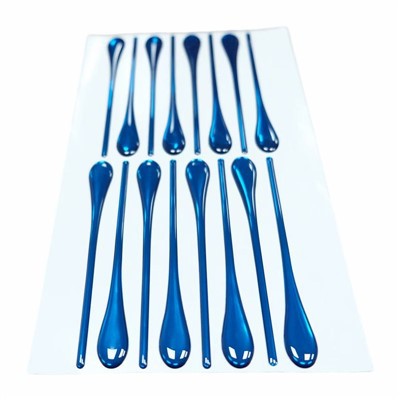
I run a label supply company, so this isn’t just textbook stuff for me. I’ve sat across from lab managers ramping up new clinical trials, chatted with battery engineers testing next-gen EV tech, and even helped a small biotech startup stop losing half their samples because their old labels melted in freezers. Those stories aren’t outliers—they’re exactly why chemistry labels aren’t just random stickers. Let’s get into it, no stuffy jargon, I promise.
First off, let’s kill the big myth: a chemistry label is not the same as the glossy sticker on your water bottle, or the price tag on a pair of shoes. Sure, at the base, it’s a sticky-backed material with printed info on it, but the “chemistry” part is two-fold: what the label is made of (its material science) and what info it’s built to carry, specifically for chemical or lab settings. Most regular labels fail hard in these spaces because they’re built for coffee shops or retail stores—put a regular paper label in a -80C freezer and it’ll turn soggy and fall off by lunch. Stick a regular vinyl label on a stainless steel lab hood and the adhesive will melt under chemical fumes. That’s where we come in.
Let’s start with the material side, ‘cause that’s the backbone of any chemistry label, and where I spend most of my time testing new stock. You’ve got a whole menu of options, each built for a specific chemical environment, and picking the wrong one is basically a recipe for disaster. For example, aqueous environments—think wet lab benches, sample racks being cleaned with bleach, or even vials stored in liquid nitrogen. Regular paper can’t handle that; it bleeds, smudges, falls apart. So we use polypropylene (PP) labels here—thin, flexible, totally water-resistant, and the ink bonds to it so well it won’t smudge even if you dunk it in a beaker of ethanol. Then there are high-temperature applications, like labels for autoclaves (those machines that sterilize lab gear at 121C and above) or furnace parts that reach 300C+. We use polyimide (Kapton, for the nerds) for those—its heat tolerance is next level, and it doesn’t yellow or peel even after 20 cycles in an autoclave. Oh, and for cryo storage? That’s a whole separate category. -80C freezers are brutal, and liquid nitrogen is even worse. We use polyester-based cryo labels that stay flexible at those temps, no cracking, and the adhesive is formulated specifically to not fail— I’ve seen labels fall off a vial at -80C before, and that’s how you lose a $10k cell line, so trust me, that’s not a risk you wanna take.
Then there’s the other side of the label: the info it carries, and how that info is handled chemically too. Chemistry labels aren’t just for writing “Sample #4” or “1M HCl.” They’re often designed with chemical-specific safety and compliance info, which is where GHS (Globally Harmonized System of Classification and Labeling of Chemicals) comes in. If you work in a lab, you’ve seen those little hazard symbols—flame, exclamation mark, skull and crossbones—right? Those aren’t just graphic design; they’re regulated, and if your label doesn’t have ‘em, you could be looking up OSHA fines or worse, a safety incident because someone misidentified a toxic chemical. I’ve had customers come to me after a near-miss where a temp label they printed in-house for a hazardous reagent didn’t have the GHS symbol, and a new intern grabbed it thinking it was just a harmless salt solution. That’s the stuff that makes labels way more important than most people realize.
Wait, let’s get real for a sec—when I started this company 10 years ago, I thought chemistry labels were just “stiff stickers for labs.” Then I worked with a battery research team that was testing new lithium-ion formulations for solar storage. Their old labels kept peeling off when the battery cells were being baked at 150C, and they’d lose all the data about the active material in each cell—like, what cathode material they used, the voltage, the test date. They couldn’t rerun those tests, ‘cause the material was destroyed after baking. So we customized a label with a heat-resistant adhesive and printed the data with a laser printer that bonds to the polyimide surface, not ink that melts. That’s when I got it: chemistry labels aren’t one-size-fits-all. They’re tools, not products. A label for a battery lab is totally different from one for a pharmaceutical clean room, which is different from one for a field testing site where they’re collecting soil samples.
Let’s also talk about the tiny, easy-to-miss details that make a chemistry label actually work. Like, adhesion surface: a label that sticks to glass is way different from one that sticks to a plastic centrifuge tube, which is different from one that sticks to a rough metal pipe. We do custom adhesive formulations for that—some adhesives are low-tack so you can reposition a label without leaving residue (great for glassware you’re reusing), others are permanent so they won’t come off even if you rub them (for vials you’re storing for years). Then there’s print compatibility: if a lab is printing 100 sample labels a day, they need a label that works with their standard desktop printer, not a fancy industrial one. We stock both thermal-transfer and direct-thermal labels, depending on what they need—thermal-transfer uses a ribbon that’s way more fade-resistant, so labels won’t smudge if they’re left in direct light or next to UV bulbs, which are common in labs. Direct-thermal is cheaper, good for short-term use, like shipping samples to another lab.
I know what some of you are thinking: “Can’t I just print labels myself? Why would I use a supplier like you?” And yeah, you can print basic labels in-house, but here’s the catch: most in-house labels aren’t tested for actual chemical use. I’ve had a customer send me a photo of a label they printed on their office printer, stuck on a sample they were sending to a collaborator, and when it arrived, the adhesive had dissolved in the shipping container’s condensation, and all the text was gone. That’s not just a hassle—they had to redo the entire experiment, delay their paper, and lose funding for next year’s research. We test every single one of our label batches in real-world conditions: we dunk them in acids, blast ‘em with solvent fumes, stick ‘em in freezers and ovens, rub ‘em with lab wipes, before we even send ‘em out. That’s the stuff that in-house printing can’t match, ‘cause you’d have to test every single roll yourself, which takes time and money most labs don’t have.
Let me touch on some specific use cases, ‘cause that’s where it all clicks. First, clinical trial labs: they use chemistry labels on patient sample vials, and those labels have to be HIPAA-compliant, have the patient ID, sample type, storage temp, and GHS info for any preservatives used. Those labels also can’t have any variable text that could be tampered with, right? So we do serialized numbering for those, so each sample has a unique, unchangeable ID. Then there’s environmental testing: field teams collect water and soil samples, which get shipped across the country in all kinds of weather—rain, snow, extreme heat. Their labels have to be waterproof, tear-resistant, and not fade even if they’re left in a hot delivery truck for 3 days. And then there’s industrial chemistry: chemical manufacturers labeling drums and tanks of industrial reagents, which have to meet EPA requirements, have large, bold text that’s readable from 10 feet away, and resist the harsh fumes from the chemicals they’re on.
Wait, and let’s not forget about the future. Chemistry labels are evolving, too. We’re working on RFID-enabled labels now that can track a sample from collection to analysis to disposal, so labs don’t have to log every single sample manually, which cuts down on human error. Those RFID labels are chemical-resistant, too—so they work in freezers and autoclaves. We’re also testing labels that change color if a sample has been compromised—like, if a vaccine sample gets too warm, the label turns red, so you know right away it’s bad, no need to check a thermometer. That’s the next level of what chemistry labels can do, and it’s exciting stuff.
A lot of people see labels as an afterthought. You buy a printer, load some cheap stock, and call it a day. But anyone who’s worked in a lab, or a manufacturing plant, or any chemistry-related space will tell you: the labels are what keep your samples safe, your data accurate, and you in compliance with safety rules. They’re not just stickers. They’re part of the scientific process. If you’re a lab manager, a chemical engineer, a field researcher, or anyone who needs labels that can handle whatever chemistry throws at ‘em, I’m here to help. We don’t do generic labels—we work with you to figure out what environment your label’s gonna be in, what info you need to put on it, and customize something that works for your specific use case, no fluff, no overcharging for stuff you don’t need.

If you’re tired of labels that fall off in freezers, smudge in solvent, or don’t meet safety requirements, hit me up. We can send you samples to test in your own space, work out a pricing plan that fits your budget, and get you set up with labels that actually do what you need them to do. No salesy jargon, no hoops to jump through—just honest, durable labels for chemistry settings that get the job done right.
Plastic Label References
- Globally Harmonized System of Classification and Labelling of Chemicals (GHS), United Nations, 2022.
- Adhesive Materials for Low-Temperature Applications, Journal of Adhesion Science and Technology, Vol. 35, No. 12, 2021, pp. 1321-1338.
- Label Materials for Sterilization Cycles: An Evaluation, Journal of Laboratory Automation, Vol. 25, No. 4, 2020, pp. 456-463.
- RFID Labelling for Cold Chain Sample Management, Clinical Laboratory Science, Vol. 33, No. 2, 2020, pp. 112-117.
Guizhou Mingguan Sign Nameplate Products Co., Ltd.
We’re well-known as one of the leading label manufacturers and suppliers in China. With abundant experience, we warmly welcome you to wholesale bulk customized label at low price from our factory. For quotation and free sample, contact us now.
Address: Xinpu New District, Zunyi City, Guizhou Province of China
E-mail: zhangyixuanmglabel@126.com
WebSite: https://www.mingguan-label.com/
