If you’ve ever installed an aluminium alloy platform on a concrete slab, you know it’s not just about setting it down and calling it done. As a supplier of aluminium alloy platforms, I’ve seen firsthand how even small misalignments—just a ¼-inch difference across a 10-foot span—can lead to squeaky walking surfaces, uneven load distribution, and accelerated wear on your platform’s structure. Too many clients skip the leveling step because they think concrete is “flat enough,” but that’s a risky assumption. Concrete slabs shift over time, settle unevenly, and often have minor flaws that throw your platform off balance. Today, I’m breaking down the science and step-by-step process to get this right, straight from the perspective of someone who’s sold hundreds of these platforms and helped troubleshoot dozens of botched installs. Aluminium Alloy Platform

First, let’s talk about why aluminum alloy platforms demand precise leveling. Unlike steel, aluminum is lightweight but rigid—great for reducing structural load, but that rigidity means it can’t flex to compensate for unevenness. If you bolt a platform to a sloped concrete slab, the bolts will pull unevenly, creating stress points that can crack welds or bend frame supports over months of use. For industrial platforms holding heavy machinery, warehouse access platforms, or even outdoor work platforms, OSHA guidelines (not just a random rule) require walk surfaces to be within 1/8 inch of level over a 10-foot span. Miss that mark, and you’re not just looking at premature repairs—you’re creating a trip hazard that can lead to safety incidents. I’ve had a client tell me their install team ignored this, and six months later, a pallet jack wheel caught on a 3/8-inch dip, damaging the aluminum deck and injuring a worker. That’s the kind of story that sticks with you, so let’s make sure you avoid it.
Now, let’s get to the practical steps. The first thing I tell every customer is to prep the concrete slab before touching your platform. Leveling starts with the base, not the platform, so rushing this step is where most people go wrong. Start by cleaning the slab thoroughly. Remove any dust, debris, oil stains, or loose concrete—oil can prevent leveling compounds or shims from adhering, and loose concrete will settle over time, throwing your platform off. A pressure washer (set to around 3,000 PSI, no higher, to avoid damaging the slab) works great for this, followed by a wire brush for any tough spots. Once it’s clean, let it dry completely—moisture under your shims will cause them to shift or break down.
Next, you need to measure the concrete’s flatness properly. This isn’t just eyeballing it—trust me, your eye will trick you, especially if the slab has minor slopes. Grab a 10-foot level (the standard for industrial leveling) and a straightedge if you have one. Place the level across the slab in several key spots: along the lines where your platform’s frame will sit, both lengthwise and widthwise, and also at the corners of the platform footprint. For example, if your platform is 8 feet by 12 feet, you’ll want to check the slab at all four corners, the midpoint of each side, and the center. Write down the differences—if the level sits flush in one corner but rocks 1/4 inch in the opposite corner, that’s the gap you need to fill. Another pro tip from my install team: use a laser level for larger slabs. It’s faster and more accurate than a manual level, especially for platforms over 10 feet long. We keep a laser level in our service truck for a reason—it cuts down on guesswork.
Once you have your measurements, you have two main options for leveling: shimming under the platform’s frame, or using a concrete leveling compound. Which one you choose depends on how big the gap is. For gaps smaller than 1 inch, shimming is the way to go—it’s fast, adjustable, and easy to correct later if needed. For gaps larger than 1 inch, a leveling compound is better because it creates a solid, uniform base without the risk of shims shifting under load. Let’s break down both methods, but remember: aluminum platforms have a frame, so you’ll always shim or level under the frame legs, not the aluminum deck itself. The deck attaches to the frame, so if you level the frame, the deck will follow.
Starting with shimming. First, pick the right shim material. We sell aluminum shims (they’re corrosion-resistant, so they won’t break down over time outdoors) and high-density plastic shims, but I tell customers to go with aluminum for heavy loads. Plastic can compress under the platform’s weight, leading to unevenness. How to install shims: after marking the low spots, slide shims under each frame leg one at a time. For small gaps (under 1/8 inch), a single shim works; for larger gaps up to 1 inch, stack shims, but never use more than 3 shims stacked together. Stacking more than that creates a weak point that can slip. Once the shims are in place, place your 10-foot level across two frame sides to check for level. Adjust shims as needed—you can tap them gently with a rubber mallet to move them up or down, and remove excess shim material if it’s sticking out. Once everything is level, drill a small pilot hole through the frame leg and shim, then secure with a bolt. This locks the shim in place so it doesn’t move when you load the platform.
Now for concrete leveling compound, which is the better choice for gaps over 1 inch. First, you’ll need to prepare the slab where you’re applying the compound. Roughen the concrete surface with a wire brush or grinder—this helps the compound adhere, so it doesn’t crack or separate later. Wipe away all dust after grinding. Mix the leveling compound according to the manufacturer’s instructions (don’t over-mix it—this weakens the formula) and pour it into the low spots. Use a trowel to spread it evenly, making sure it’s level with the rest of the slab. Wait at least 24 hours for it to cure completely before setting your platform on top. If you’re using a two-part epoxy leveling compound, it might cure faster (around 8 hours), but always check the product’s cure time—putting weight on it too soon will ruin it. I once had a customer who skipped the cure time, set their platform on after 12 hours, and the compound cracked under a 2,000-pound load. That cost them extra time and money to redo, so I always emphasize patience here.
Wait a second—what about outdoor platforms, exposed to weather? That’s a different scenario, right? Outdoor concrete slabs are often more prone to moisture buildup, so your leveling method needs to account for that. I recommend adding a 1/4-inch gap between the bottom of the platform’s frame and the concrete slab to let air circulate, preventing moisture from getting trapped and causing corrosion. You can achieve this with slightly taller shims, or use plastic or rubber pads under the shims to create the gap. Also, for outdoor installs, avoid wooden shims—they absorb moisture, warp, and break down in a year or two. Stick to aluminum or heavy-duty plastic shims.
Now, a common mistake I see: people level the platform on the slab, but forget to check the overall alignment with any existing structures. If your platform is connecting to a building, for example, you need to make sure the top of the platform is level with the building’s floor or doorway. Measure the height of both the platform’s top surface and the building’s entrance floor at three points each to ensure they match within 1/8 inch. If they don’t, you might need to adjust the slab’s leveling or the platform’s frame height. We include adjustable frame legs on most of our standard aluminium alloy platforms, which is a game-changer for this exact scenario. If the gap between the platform and the building is too big, you can’t just stack random materials—use a ramp that’s rated for the same load as your platform, and make sure it’s also level.
Once your platform is set and level, the final step is to test it. This is non-negotiable. Walk across the platform yourself, paying attention to any squeaks or spots where it feels uneven. Use a level again across the deck, not just the frame, to make sure the aluminum surface is flat. For heavier loads (like machinery or pallets), have a colleague stand on one end while you check the level on the other—you want to make sure it stays level under weight, not just empty. If it rocks, you missed a shim spot or the compound didn’t cure properly. We always test our platforms before shipping, but every install is different, so a final check is essential.
Now, let’s talk about when to call in a professional. If your concrete slab has large, uneven gaps (over 2 inches), or if it’s a newer slab that’s still settling, leveling it might require a professional concrete contractor who specializes in slab leveling. Trying to pour a thick layer of leveling compound over 2 inches can lead to cracking, and you won’t get the uniform flatness you need. Also, if your platform is for heavy industrial use, holding 5,000 pounds or more, a professional can ensure the leveling is within OSHA standards, preventing liability issues. As a supplier, I always tell customers that a $500 professional leveling job is way cheaper than replacing a damaged platform or dealing with a safety claim.
Wait, one more thing: maintenance. Leveling isn’t a one-and-done step. Over time, concrete can settle, especially if the slab is on soil that shifts. I recommend checking the platform’s level every six months, especially if it’s in a high-traffic area. Tighten the bolts on the frame legs, and replace any worn shims if you notice the platform starting to rock. Our aluminium alloy platforms are built to last, but they need a little care to stay level.
At the end of the day, leveling an aluminium alloy platform on concrete is about attention to detail. It’s not the most glamorous part of the install, but it’s the most important. Skip the quick fixes, take the time to prep the slab, measure accurately, and use the right materials, and your platform will be safe, durable, and functional for years. If you’re planning an install and want to make sure you get every step right, or if you have questions about the best leveling method for your specific platform size or use case, don’t hesitate to reach out to our team for a consultation. We work with contractors, warehouse managers, and DIYers to make sure their aluminium alloy platforms are installed correctly, no matter the project.
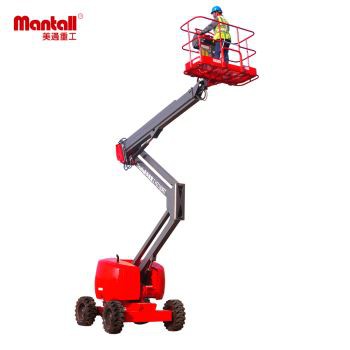
Articulated Boom Lift References:
- Occupational Safety and Health Administration (OSHA). “Walking-Working Surfaces: General Requirements.” 29 CFR § 1910.22.
- Aluminum Association. “Specifications for Aluminum Structures, 2020 Edition.” The Aluminum Association, Inc.
- American Concrete Institute (ACI). “Guide for Concrete Floor and Slab Construction.” ACI 302.1R-15, 2015.
- Shank, K.A. “Concrete Leveling: Methods and Best Practices.” Construction Management Association of America, 2021.
Mantall Heavy Industry Co., Ltd.
Mantall Heavy Industry Co., Ltd. is well-known as one of the leading aluminium alloy platform manufacturers and suppliers in China, featured by quality products and good service. Welcome to buy discount aluminium alloy platform made in China here from our factory. For pricelist and quotation, contact us now.
Address: NO.62, Binhai Avenue, Binhai Industrial Park, Qidong City, Jiangsu Province, China
E-mail: Gloria@mantall.com
WebSite: https://www.mantallawp.com/
