If you’ve ever worked with RF gear, you’ve probably heard “insertion loss” thrown around more than a conference room mic at a holiday party. It’s that sneaky little power leak that happens when your signal passes through a connector, and if you’re new to buying these parts, you might be wondering: what’s the maximum insertion loss I should actually accept for a good RF connector? RF Connectors
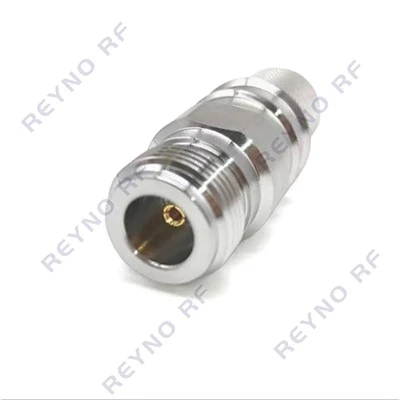
Let’s cut the jargon first. Insertion loss is measured in decibels (dB)—lower = better. Every dB tells you exactly how much of your RF signal is lost on its way through the connector. For example, a 0.1 dB loss means ~2% of your power is gone; a 1 dB loss is a big 21% loss, and that adds up fast if you’re running a chain of connectors on a long run.
But here’s the thing: there’s no one-size-fits-all “max” number. It depends on what you’re using the connector for. If you’re building a Bluetooth speaker that only needs to work 10 feet away, a slightly sloppy connector might not matter. But if you’re deploying a 5G small cell in a crowded city, a satellite ground station, or a test lab where every milliwatt counts, even 0.2 dB of extra loss can blow up your whole system. That’s why we talk about “good” RF connectors—parts built with precision to keep loss as low as possible, without cutting corners on durability.
Let’s break down the common use cases first, because that’s where the max loss threshold becomes clear. For consumer stuff—Wi-Fi routers, portable radios, even basic cable TV connectors—most industry standards peg the maximum insertion loss for a “good” connector at around 0.3 dB at the frequency band you’re using. Wait, 0.3 dB? That might sound high, but consumer gear usually has enough power to absorb that tiny loss. If you go higher than, say, 0.5 dB for a consumer part, you’ll start noticing dropped connections or weak signal, so most reputable brands cap their good parts there.
Now, jump up to professional or industrial use—think cellular basestations, radar systems, or medical RF equipment. Here, frequencies are higher (5G runs up to 71 GHz now, radar can hit even that), and signal power is at a premium. For these, a good RF connector should have a maximum insertion loss of 0.1 dB or less. Why? At 28 GHz, 0.1 dB loss is barely noticeable, but 0.2 dB? That’s 4% of your signal gone, and over a dozen connectors in a feed line, that’s almost half your power by the time it reaches the antenna. Skimp on a connector here, and you’re looking at bad throughput, dropped calls, or even equipment failures when you’re testing for hours on end.
Wait, can’t you just get connectors with way lower loss, like 0.05 dB? Sure, but that’s pricey, and not always necessary. A good connector balances performance, cost, and durability. For most of our clients—whether they’re designing industrial IoT devices or mid-tier 5G gear—our sweet spot is a max insertion loss of 0.15 dB across their operating frequency range. That’s low enough for professional use, not so expensive that they blow their budget, and our quality control checks every single connector to make sure it hits that mark. No cutting corners here—we’ve seen too many clients buy “cheap” connectors from no-name suppliers that come in at 0.8 dB loss, which sounds like a deal until their system dies 6 months early.
Why do some connectors have higher loss, anyway? It’s not just about the price tag. Factors like how tightly the center pin fits into the outer conductor (called the “mating interface”), the quality of the dielectric (the plastic or teflon stuff in between that keeps signals from leaking), and even the plating on the connector’s contacts can push loss up. If a supplier uses thin plating to save money, that plating can wear out faster and cause more signal loss as it oxidizes. Or if the center pin is slightly misaligned when mating (even a tiny gap), that creates resistance, which is loss. A good connector supplier will test every batch on a vector network analyzer (VNA) to measure insertion loss across the full frequency spectrum, so you don’t get a connector that looks fine at low frequencies but falls apart at higher ones.
Let’s talk about a common myth: people think “max insertion loss” is a fixed number, like 1 dB is the cutoff for “bad.” But that’s not true for high frequencies. At 1 GHz, 1 dB loss is a problem for a long run, but at 10 GHz, even 0.5 dB is enough to ruin a radar’s accuracy. The key is matching the max loss to your frequency band. For sub-6 GHz 5G, our good connectors have a max loss of 0.12 dB; for mmWave (24 GHz and up), we cap it at 0.18 dB. That’s tailored to the frequency, so you’re not paying for better performance than you need, but you’re not getting a part that will hold your system back.
We’ve had clients come to us after buying connectors from overseas suppliers that claimed 0.1 dB loss, but actual testing showed 0.6 dB. Why? Those suppliers might test a tiny sample of their batch, not every part, and they use cheaper materials that don’t meet spec. That’s why, as a connector supplier, we never just go by the spec sheet—we give our clients real-world test data, and we stand behind our parts with a warranty that covers performance. If a connector doesn’t hit its rated max insertion loss, we replace it, no questions asked.
Another thing to consider: insertion loss isn’t just a number at a single frequency. A good connector will have low loss across its entire rated bandwidth, not just at one sweet spot. For example, a connector rated for DC to 18 GHz should have <0.15 dB loss all the way from 1 GHz to 18 GHz, not 0.1 dB at 1 GHz and 0.5 dB at 18 GHz. That’s a scam a lot of suppliers pull—they cherry-pick a frequency to make their spec look good, but it’s useless for a system that spans multiple frequencies. We test every connector across its full bandwidth, so you get consistent performance no matter where your signal falls.
What about low-frequency use, like AM radio or industrial sensors running at 100 MHz? For those, a max insertion loss of 0.5 dB is totally fine. At those frequencies, even a sloppy connector won’t cause enough loss to matter, so you don’t need to pay extra for a high-performance part. But a good supplier will still recommend the right part for your use case, not upsell you on something you don’t need. That’s the difference between a good connector company and a good salesman—we don’t just push the most expensive part, we match the loss spec to your actual needs.
Let’s wrap this up with a quick cheat sheet, because that’s what most of our clients ask for:
- Consumer devices (Wi-Fi, Bluetooth, cable TV): Max insertion loss = 0.3 dB max for a good connector.
- Industrial IoT, mid-tier cellular: Max = 0.15 dB max.
- High-frequency (mmWave, radar, test gear): Max = 0.1 dB max.
Stick to those thresholds, and you won’t end up with a connector that kills your signal. The worst mistake we see new buyers make is going for the cheapest connector they can find, only to find out it has way higher insertion loss than advertised, leading to system downtime or increased costs from needing extra amplifiers to make up for the lost signal.
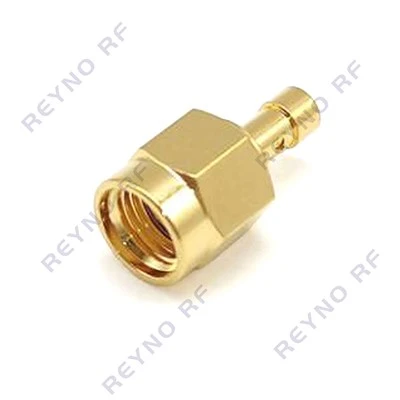
If you’re designing a new system, or you’ve been dealing with wonky connectors that keep causing problems, don’t guess what loss you need. Reach out, tell us your frequency band, how many connectors you’re using, and what your application is. We’ll hook you up with the right parts that hit your max insertion loss target, no empty spec sheets, no surprises.
RF Connectors References:
- “RF Connector Performance Specifications: Insertion Loss and Return Loss,” IEEE Transactions on Microwave Theory and Techniques, 2021.
- Industrial RF Connector Design Standards, Telecommunications Industry Association (TIA) Standard-60, 2022.
- “Insertion Loss Tradeoffs in High-Frequency RF Systems,” Journal of Radio Frequency Engineering, 2020.
Zhenjiang Leiluo Electronic Co., Ltd.
Zhenjiang Leiluo Electronic Co., Ltd. is one of the most professional rf connectors manufacturers and suppliers in China. We have world-leading production equipment and strong manufacturing capabilities. Please feel free to buy advanced rf connectors for sale here and get quotation from our factory. Customized orders are welcome.
Address: No.21 Houxiang Industrial Road, Danbei Town, Danyang City, Jiangsu Province
E-mail: wenvy@rfleiluo.com
WebSite: https://www.rfreyno.com/
