If you’ve ever stood in a processing plant watching a gyratory dryer spin its way through drying granular materials, you might’ve stopped to ask a common question: how big do these machines actually get? As someone who’s spent the last 12 years selling and servicing gyratory dryers, I can tell you the size range isn’t just a number—it’s a detail that makes or breaks a project, no matter if you’re drying sand for a concrete plant, distillers’ grains for a ethanol facility, or agricultural grains for a feed mill. Too small, and you’ll bottleneck production; too big, and you’re wasting energy and floor space. Let me walk you through the real size range of gyratory dryers, what drives those numbers, and how we tailor machines to fit your exact needs. Gyratory Dryer
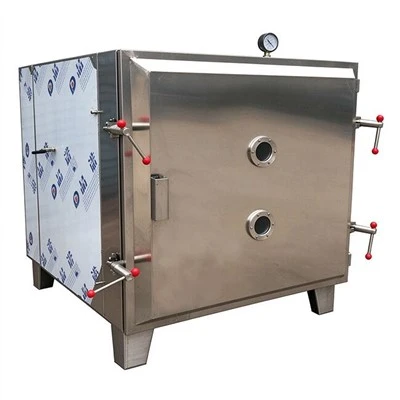
First, let’s get clear on what a gyratory dryer is, because size ties directly to how it works. Unlike rotary dryers that tumble material in a big, rotating drum, gyratory dryers use a horizontal, tapered chamber that spins slowly and vibrates gently as hot air flows through. The vibration keeps material from sticking, which makes them ideal for fine, sticky, or heat-sensitive products that would ball up or degrade in other dryers. That design limits how we scale them—you can’t just double the diameter of a small machine and call it a large one; you have to adjust the taper, vibration amplitude, and air flow to keep that gentle, even drying action that’s their selling point.
On the small end of the spectrum, we’re talking about units built for small-scale operations or lab testing. These are usually tabletop or freestanding machines with chamber diameters starting at 12 inches (30.5 cm) and lengths up to 4 feet (1.2 meters). I’ve supplied these to university research labs, small craft breweries drying spent grain, and startup specialty chemical manufacturers who’re testing a new product line before scaling up. A 12-inch gyratory dryer can process just 5 to 10 pounds (2.3 to 4.5 kg) of material per hour, which is perfect for small batches, but they’re not designed for continuous, high-volume work. We also build compact, skid-mounted small models for job shops that move equipment between sites—these are around 24 inches (61 cm) in diameter, process up to 50 pounds (22.7 kg) per hour, and fit through standard doorways, which is a big plus for facilities with limited space.
Most of the machines we sell fall in the mid-range, where most industrial operations live. This is where diameters run from 3 feet (0.9 meters) to 8 feet (2.4 meters), and lengths from 10 feet (3 meters) to 25 feet (7.6 meters). A 5-foot diameter gyratory dryer, for example, can handle between 500 and 2,000 pounds (227 to 907 kg) of granular material per hour, depending on the product and desired moisture level. I recently sold three 6-foot mid-range models to a large animal feed mill in Iowa—they were replacing old rotary dryers that were wasting too much energy on their corn distillers’ grains. The mid-range gyratory dryers cut their drying time in half, because the gentle vibration keeps product moving evenly, so every particle gets exposed to hot air instead of clumping up in the drum. Another common mid-range use is sand drying for construction materials; a 7-foot model can dry up to 1.5 tons (1,361 kg) of sand per hour, which is exactly what asphalt plants and ready-mix concrete operations need.
Now, the big ones—large-scale gyratory dryers built for major processing facilities. These are not off-the-shelf units; they’re custom-engineered to order. Their chamber diameters range from 9 feet (2.7 meters) to 12 feet (3.7 meters), and lengths up to 40 feet (12.2 meters). These machines are built for high-volume operations: ethanol plants that process 50+ tons of grain per day, large-scale salt refining operations, and mining companies drying metal ores. Last year, we delivered a 10-foot, 35-foot long gyratory dryer to a sugar refinery in Brazil that needed to dry raw sugar crystals for export. That model can process 12 tons (10,886 kg) of sugar per hour, and it’s still gentle enough that even small crystal fragments don’t break, which was a non-negotiable for their export contract. The key with large gyratory dryers is that we don’t just scale up every part equally—we adjust the taper of the chamber to ensure material moves at the right speed, we upgrade the vibration motor to handle the extra weight, and we increase air flow capacity without raising the temperature too high, because most large-scale drying is for products that can’t handle extreme heat.
You might be wondering, what factors determine which size you need? It’s not just production volume. If your material is fine and sticky—like clay or wet distillers’ grains—you might need a larger diameter to accommodate the air flow needed to keep it moving, even if your production volume is medium. If you’re drying heat-sensitive material, like pharmaceuticals or food-grade ingredients, you might opt for a slightly smaller model with a lower vibration amplitude to avoid damaging the product. Floor space is another big one; a 10-foot diameter dryer needs at least 15 feet of clearance around it for maintenance and operation, so if your plant only has 10 feet of space, we’ll downsize to an 8-foot model, even if your production could support a larger one. I always tell customers to come with two numbers: their ideal production rate, and their maximum floor space, because we can usually find a middle ground without overspending on a machine they don’t need.
One common mistake I see new operators make is assuming gyratory dryers are too small for their needs, or too big. A few years back, a small gravel company reached out because they were using a rotary dryer that was breaking too many stone chips during drying. They tried to save money by buying a used 3-foot gyratory dryer, thinking it would be enough for their 10-ton daily output. By the time I met them, they were running two shifts and still falling behind, and the small dryer was working overtime, leading to frequent breakdowns. We ended up selling them a 6-foot mid-range model that doubled their output and cut chip breakage by 30%, and it used 25% less energy than their old rotary dryer. That’s the thing about gyratory dryers: their size has to match both your material and your process, not just your production numbers.
Another point to note is that some manufacturers offer “extended” size ranges for special applications, but those are almost always custom builds. For example, we’ve built a 14-foot diameter dryer for a mining operation drying copper ore, but that’s a one-off—most manufacturers don’t keep these large units in stock, because they take months to build and require on-site installation support. On the flip side, if you have a tiny operation, we also make custom mini gyratory dryers that are smaller than the 12-inch lab models, for small batch specialty products, but those are less common. The sweet spot, for most industrial users, is between 2 feet and 10 feet in diameter, and 5 feet to 40 feet in length.
If you’re in the market for a gyratory dryer, don’t rely on generic size charts from other suppliers. Every material is different, every plant has unique space and power constraints, and every production line has different needs. We work with you to calculate exactly what size you need: we’ll ask about your material’s moisture content, desired final moisture, production rate, floor space available, and any special requirements (like heat sensitivity, product fragility, or dust control). That’s how we’ve been doing it for decades, and that’s why customers come back to us—we don’t just sell a machine, we make sure it fits your operation.
Whether you’re just testing a new product in a lab, scaling up a small craft operation, or expanding a major industrial facility, there’s a gyratory dryer size that’s right for you. If you’re ready to learn more about what size would work for your needs, reach out to our team to discuss your project details. We can help you avoid the common pitfalls of buying a dryer that’s too big or too small, and make sure you get a machine that delivers consistent, efficient drying for years to come.
Vertical Mixer References
- Perry, J. H. (1997). Chemical Engineers’ Handbook, 7th Edition. McGraw-Hill.
- ASTM International. (2020). Standard Guide for Selecting Industrial Drying Equipment (Designation: E2717-20).
- Mujumdar, A. S. (2006). Handbook of Industrial Drying, 3rd Edition. CRC Press.
- Gyratory Dryer Design and Operation Manual. (2021). Industrial Processing Equipment Association.
Nanjing Huozao Machinery Technology Co., Ltd.
Nanjing Huozao Machinery Technology Co., Ltd. is one of the most professional gyratory dryer manufacturers and suppliers in China, also supports customized service. With abundant experience, we warmly welcome you to buy durable gyratory dryer for sale here from our factory. For price consultation, contact us.
Address: No.2, Kuailu Road, Longtan Street, Qixia District, Nanjing
E-mail: hz@huozaodryer.com
WebSite: https://www.huozaodryer.com/
