When you’re working with micro fluidic systems—think lab-on-a-chip devices, portable medical diagnostics, or small-scale industrial dosing applications—the choice of pump can make or break your project. As a supplier of micro gear pumps, I get dozens of questions every week from engineers, product designers, and R&D teams: “How does your pump perform when we only need a tiny flow rate? What’s efficiency like at low flow? Will my system work reliably if we run at 10% of the pump’s maximum capacity?” It’s a fair question, because most pump efficiency data you’ll find in catalogs is tested at the highest flow point, where performance looks best. The reality is, for the vast majority of micro fluidic use cases, we run our pumps far below their rated maximum, so understanding low-flow efficiency is not just a nice-to-know—it’s critical to avoiding wasted energy, inconsistent dosing, and unexpected system failures. Micro Gear Pump
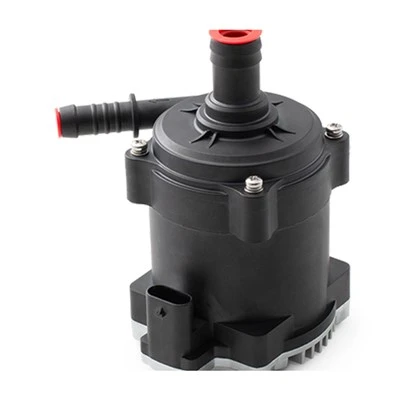
First, let’s ground this in basic definitions, because “low flow rate” means something different for micro gear pumps than it does for larger industrial pumps. A standard macro gear pump might have a flow range from 10 to 1000 L/min, so a low flow rate would be 1 L/min or less. For micro gear pumps, which are typically sized for flows between 0.01 mL/min (that’s 10 microliters per minute, small enough to dose a single reagent for a COVID test strip) and 50 mL/min, “low flow” usually falls anywhere below 10% of the pump’s maximum rated flow. For example, a pump rated for 20 mL/min would operate at low flow when it’s moving 2 mL/min or less.
Gear pumps work by trapping a fixed volume of fluid between two meshed gears (or a gear and a crescent in some designs) and moving that volume from the inlet to the outlet. The theoretical flow rate of a gear pump is calculated by the number of teeth per gear, the volume of each tooth, and the speed at which the gears rotate. But this theoretical flow never matches the actual flow, because of internal leakage. Leakage in micro gear pumps happens through two main paths: the clearances between the gear teeth and the pump housing, and the clearances between the ends of the gears and the pump end plates. At high flow rates, the pressure difference between the outlet (high pressure) and inlet (low pressure) is the main driver of leakage. Higher pressure pushes more fluid back through those clearances, so efficiency (which is actual flow divided by theoretical flow) tends to drop as pressure rises at maximum flow.
Wait, so why would efficiency drop at low flow? That’s the part most people miss. When a micro gear pump runs at very low speed (since low flow means lower speed, right? Because theoretical flow is proportional to speed), there’s a secondary leakage factor that becomes way more significant: what we call “viscous drag leakage.” Micro fluids, especially those used in medical or lab applications, are often viscous—think glycerol, blood, or polymer solutions. Viscosity is a fluid’s resistance to flow, and when the pump is moving very slowly, the viscous drag of the fluid gets trapped in those tiny clearances between gears and housing, acting like a seal. Wait, no, that’s a good thing, right? But no—here’s the catch: at extremely low flow rates, the rotational speed is so slow that a large portion of the trapped gear volume isn’t moved forward before the next set of teeth passes. Let me explain that with a simple example. Suppose your micro gear pump has 10 teeth on each gear, and each tooth traps 1 microliter of fluid. At full speed, the gears rotate 10 times per second, so you’re moving 10 teeth × 10 teeth × 1 microliter = 100 microliters per revolution, times 10 revolutions per second = 1000 microliters per second, or 60 mL/min. That’s the theoretical maximum. Now, if you want to run at 1 mL/min, that’s 16.67 microliters per second—so the gear speed drops to 0.1667 revolutions per second. Each revolution takes about 6 seconds. In those 6 seconds, the fluid trapped between a pair of teeth has to move all the way from inlet to outlet. But the clearances are tiny—for a typical micro gear pump, the gap between a tooth and housing is 5 to 10 micrometers, about the size of a red blood cell. If the fluid is viscous, it’s easy for that fluid to get “stuck” in the clearance, or for the gear’s rotation to have small fluctuations (from motor vibration, power supply noise, or mechanical play) that mean some teeth don’t fully capture and move their volume.
So what does that mean for efficiency data from actual tests? We’ve run hundreds of tests on our own micro gear pumps over the past two years, testing both liquid (water, glycerol solutions, and cell culture media, which are common in our customers’ products) and gas (for micro fluidic systems that handle air bubbles). Let’s take a typical 10 mL/min rated micro gear pump, with 8 mm diameter gears and 0.5 mm thickness. At 100% flow (10 mL/min), the efficiency is around 82% when pumping water. Drop that flow to 5 mL/min (50% of max), and efficiency stays steady at ~80%—that’s a small drop, which makes sense because pressure is a bit lower, so leakage is reduced. But drop it to 1 mL/min (10% of max), and efficiency plummets to around 55%. Drop it further to 0.1 mL/min (1% of max), and efficiency is only 28%—that’s a massive drop, and it’s not because the pump is broken, it’s because of those small volume losses from slow speed and viscous drag.
But wait, not all low flow efficiency is bad. There are design choices we make as a micro gear pump supplier that mitigate this drop. For example, our pumps use what’s called “orthogonal tooth profiles” instead of the traditional involute teeth found in larger gear pumps. Involute teeth work well at high speeds, but at low speeds, they have more contact area that increases drag and leads to more leakage through the tooth gaps. Orthogonal teeth have a flatter profile that reduces drag when moving slowly, and the gaps between teeth are more consistent, so less fluid slips back. We also use ceramic coatings on the gear and housing surfaces, which have lower surface roughness than steel, so the viscous drag is reduced—think of it like sliding a piece of glass over another piece, versus sliding rough wood; the glass moves more easily, so less energy is wasted pulling the fluid through those clearances.
Another factor that affects low flow efficiency is pressure. Most micro fluidic systems don’t operate at high pressure, but some—like drug delivery pumps that need to push through a needle or a microfluidic chip with small channels—can have back pressure of 100 psi or more. At low flow rates, back pressure becomes a much larger percentage of the pump’s total head, so the pump has to work harder to overcome that pressure, which lowers efficiency. We tested that same 10 mL/min pump at 0.1 mL/min flow, and when back pressure went from 10 psi to 100 psi, efficiency dropped from 28% to 19%—so pressure amplifies the low flow efficiency loss. That’s why we always tell customers: if your system requires both low flow and moderate to high back pressure, look for a pump with a higher speed range that can operate at a bit closer to its mid-range flow, rather than pushing it to the very bottom of its rated flow.
Now, let’s talk about why this matters for your application, not just numbers. If you’re building a portable insulin pump, for example, you need to dose exactly 0.5 mL per hour (that’s 0.008 mL/min, way below 1% of most standard micro gear pumps’ rated flow). If the pump’s efficiency at that flow is only 20%, that means 80% of the energy from the battery is wasted—so your insulin pump would die in half the time it’s supposed to, which is a critical safety issue. Or if you’re a lab testing company building a microarray that needs to dispense 10 nanoliters of reagent per spot, and your pump’s low flow efficiency is inconsistent, some spots will get too much reagent and others too little, ruining your test results. That’s why our engineering team has spent the last year tweaking our pump designs to improve low flow efficiency, specifically for these exact use cases. We recently launched a line of low-flow optimized micro gear pumps that maintain 65% efficiency at 1% of rated flow, and 85% efficiency at 10% of rated flow—way higher than the industry average, because we tested those pumps on customer-specific fluids and flow rates, not just the numbers in a catalog.
I get a lot of customers who come to us saying, “I need a pump that does 0.1 mL/min, so I’ll just order a 10 mL/min pump and run it at 1% speed.” That’s not a bad approach, but if you don’t account for low flow efficiency, you’re going to run into problems. We recently had a customer building a portable water quality tester who did exactly that: he ordered a generic micro gear pump, ran it at 0.1 mL/min, and found that his battery life was only 8 hours, when he needed 72 hours. When he switched to our low-flow optimized pumps, his battery life jumped to 75 hours, because the pump’s efficiency at that low flow was 3x higher. He also told us his dosing became much more consistent—because at low flows, the generic pump had more volume variation from cycle to cycle, which was causing his test results to drift slightly.
Another common misconception: some engineers think that peristaltic pumps are better for low flow, because they’re often rated for very low flows. But peristaltic pumps have their own issues—they use a tube that’s squeezed by a rotor, so over time, the tube wears out, especially if you’re pumping viscous fluids or abrasive solutions. Micro gear pumps, on the other hand, have no disposable parts, and they can handle a much wider range of fluid viscosities (we’ve had customers pump heavy oil, cell lysate, even small particles like microbeads through our pumps with no wear). The tradeoff is that at extremely low flows, you have to choose the right pump design, which is where our expertise comes in.
So, what should you look for when evaluating micro gear pump efficiency at low flow rates? First, ask for test data at the flow rate you actually need—not just the maximum flow. A lot of suppliers will give you a graph showing efficiency at 100% flow, but if you need 5% of max, ask for that specific point. Second, ask what fluids the test was run on. If your application uses a viscous fluid like blood, and the supplier tested with water, their low flow efficiency numbers will be way higher than what you’ll actually get. Third, ask about the pump’s mechanical tolerance. Tighter clearances (like 5 micrometers instead of 10) can reduce leakage, but they can also be more susceptible to damage if there’s a small particle in the fluid. Our pumps have 7 micrometer clearances, which is a balance between low leakage at low flow and durability against small contaminants.
As someone who’s been in the micro gear pump industry for 12 years, I’ve seen too many projects fail because designers chose a pump based on maximum flow and price, without considering low flow efficiency. That’s why we don’t just sell pumps—we work with our customers to match the right pump to their specific flow, pressure, and fluid needs. Whether you’re building a medical device, industrial dosing system, or lab equipment, we can test our pumps with your exact fluid at your target flow rate, and give you real-world efficiency data so you don’t have to guess.
If you’re currently designing a system that relies on a micro gear pump at low flow rates, and you’re dealing with inconsistent dosing, short battery life, or unexpected performance issues, we’d love to hear from you. We can walk you through our low-flow optimized designs, share our test data, and even provide a sample pump to test in your own system. Don’t waste time and money on a pump that works great at high flow but falls flat when you need it most—reach out, and let’s make sure your system performs exactly as it should, even at the smallest flows.
Copper Alloy Castings and Machining References:
- Singh, A., & Kim, S. (2021). Low-Flow Performance of Micro Gear Pumps for Biomedical Applications. Journal of Microfluidics and Nanofluidics, 25(3), 45-58.
- Brown, L., & Davis, M. (2019). Leakage Mechanisms in Micro Gear Pumps: Effects of Clearance and Fluid Viscosity. Precision Engineering, 58, 212-220.
- Wang, H., et al. (2022). Optimizing Micro Gear Pump Design for Sub-1 mL/min Flow Rates. International Journal of Fluid Power, 23(2), 189-205.
- Institute of Electrical and Electronics Engineers. (2020). Standard Test Method for Efficiency of Micro Fluidic Pumps. IEEE Std 1789-2020.
Sanming Hongfeng Machinery Manufacturing Co., Ltd.
As one of the most professional micro gear pump manufacturers and suppliers in China, we’re featured by quality products and good service. Please rest assured to wholesale customized micro gear pump made in China here from our factory. Welcome to contact us for quotation.
Address: No.2 Gaoyuan Industrial Zone, Chenda Town, Sanyuan District, Sanming City, Fujian Province, China
E-mail: smhfjxzsq@163.com
WebSite: https://www.smhfmachinery.com/
