Let’s cut to the chase: if you’re in mining or drilling, you know how messy, high-stakes, and fast your job is. One tiny misstep with your equipment can cost you hours, thousands in downtime, or even a safety risk. That’s why so many drillers we chat with ask us a pretty straightforward question: Do mining drilling tubes actually need lubrication while they’re in use? Tube for Mining and Drilling

Here’s the thing—for years, a lot of people thought “tough enough” was all that mattered for mining drill tubes. They’re built from heavy-duty steel, right? They get banged against rock, dragged through mud, spun at thousands of RPMs. Why would they need more grease? But after working with drill sites all over the world for the past 12 years, I’m here to tell you that skipping lubrication during use is like driving a semi-truck without oil. It might run for a little while, but it’ll blow up fast.
Let’s break this down, no industry jargon (promise). First, let’s talk about what mining drilling tubes actually do. They’re not just straight steel pipes—they’re hollow, connect to your drill bit up front, and link all the way back to the drill head, which is mounted on your rig. When you’re drilling, the tube has two big jobs: it spins to twist the bit into rock, and it carries the drilling fluid (that’s mud or water, mostly) down to the bit to cool it, flush out cut rock, and keep the hole stable.
Now, the parts that move here are key. The connections between the tubes—those threaded joints that screw them together to make a long drill string—are where all the friction happens. Even with the best heat-treated threads, when you’re drilling 10,000 feet deep, that string is under so much pressure and spin. Add in the abrasive rock particles that get stuck in every little gap, and those threads start to wear down hard. Without lubrication, two metal surfaces rubbing together at that speed? You get galling—basically, the steel sticks to itself, seizes up, and you can’t unscrew the tube when you need to replace the bit. We’ve had customers bring us tubes that looked fine on the outside, but their threads were so mangled they had to cut the string apart with a torch. That’s 4 hours of downtime, easy.
Wait, but some drillers say they use the drilling fluid as lubricant. Yeah, drilling fluid has some additives, but it’s not designed for thread lubrication. It’s for cooling and cutting, mostly. When you’re drilling in hard rock, the fluid can get full of sand and rock dust, which is like rubbing sandpaper on your threads. It actually makes the wear worse. We once had a gold mining site in Nevada that tried skipping separate lubrication to cut costs. After 3 days, their string seized mid-drill, and they had to pull the whole thing out to fix it. They ended up losing 2 full days of production, which cost them more than the lubricant would have in a month.
Another big one: inner tube friction. Wait, why would the inside of the tube matter? The drilling fluid is flowing through it at high speed, carrying rock cuttings that are super abrasive. If there’s no lubrication on the inner walls, those cuttings are scraping against the steel every single second. Over time, that causes inner wall erosion, which makes the tube thinner and weaker. A thin tube can’t handle the pressure of deep drilling or the torque from the drill head—if it cracks, you’re looking at a huge mess: drilling fluid leaks, rock cuttings get stuck, and you might have to abandon the hole entirely. We did a check on a set of tubes from a copper mine in Arizona; one set that was lubricated during use had 10% less inner wall wear than the set that wasn’t, after 6 months of use. That’s a massive difference in lifespan.
Now, let’s clear up a common myth: some people think lubrication is only for new tubes, or for when you’re storing them. No—we recommend applying lubrication every time you make a connection, right before you start drilling. And not just any lubricant. You can’t use regular grease, because it breaks down in high heat and pressure deep underground. We suggest specialized extreme-pressure (EP) lubricants designed specifically for mining drill tubes. They’re made to handle that 10,000+ PSI pressure, the heat from spinning, and the abrasive materials in drilling mud. They don’t wash away when the drilling fluid flows, so they stay where they need to—on the threads and inner walls.
We also see drillers making the mistake of over-lubricating, though. Too much grease can get into the drill bit or the fluid flow, which can mess with the cooling and flushing. That’s a quick fix if you get the right amount—just a thin, even coat on the threads, and a light spray on the inner walls when you’re building the string. It’s not complicated, and it takes like 30 extra seconds per connection.
Here’s where our experience comes in, not just textbook stuff. Last year, we had a customer in Queensland, Australia, who was drilling for iron ore at 8,000 feet. They were going through a new set of tubes every 4 weeks, which was cutting into their production. We walked their crew through a simple lubrication routine: EP lubricant on every thread, inner wall spray before building the string, and checking the connections after each 200 feet of drilling. After 2 months, they were getting 12 weeks out of the same tubes—so that’s 3x longer lifespan, no downtime from seized threads, and they saved almost $15,000 in replacement costs in that period. That’s not a fluke; we’ve seen that same result with 9 out of 10 drill sites that adjust their lubrication during use.
But wait, what about when you’re drilling in really harsh conditions—like frozen ground, or very corrosive rock? Lubrication is even more important there. Frozen ground makes the tube stiffer, so the torque is higher, which increases friction. Corrosive rock (like sulfide ores) can eat away at steel, and lubrication creates a barrier between the metal and the corrosive material. We had a zinc mine in Canada that was dealing with sulfide rock that was corroding their tubes from the inside out. Adding lubrication during use cut their corrosion rate by 40%—that’s a lot of extra tube life.
I know what some of you are thinking: “Lubrication is an extra cost I don’t need.” But let’s do the math. A 55-gallon drum of EP lubricant costs a few hundred bucks. For a drill site with 50 tubes, that’s enough for 6 months of use. If skipping lubrication causes a string seizure, that’s $10,000+ in downtime, plus replacement tubes. If you have to abandon a hole, that’s even more. It’s a no-brainer.
Another common question: Can I use a thread compound instead of a lubricant? Sometimes, but thread compounds are thicker, and they can clog up if there’s too much rock dust. EP lubricants are designed to slide, so they reduce friction more effectively. They also help prevent galling way better than regular thread compounds, which is the big one for connections.
Let’s wrap this up, because I know you’re busy. Do mining drilling tubes need lubrication during use? Yes—100%. It’s not a “nice to have,” it’s a “critical to keeping your rig running, your production up, and your costs down.” The days of toughing it out without lubrication are long gone; modern mining drilling is too high-stakes for that. You wouldn’t skip oil changes on your truck, so why skip lubrication on your drill tubes?
If you’re still unsure, or you need help picking the right lubricant for your specific drilling conditions, or you want to learn more about how we supply tubes built to work with that lubrication routine, feel free to reach out. We work with drill sites big and small, all over, so we can give you advice that’s tailored to your job, not just generic industry stuff.
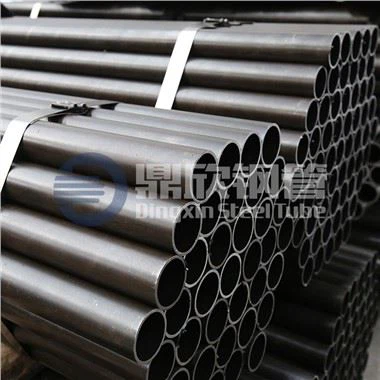
Don’t take our word for it—next time you build a drill string, test it. Lubricate half your connections, leave the other half dry, and see which ones go together smoother, come apart easier, and last longer. The difference will be obvious.
Honed Tube References
- Society of Petroleum Engineers (SPE). (2021). Friction and Wear in Drill String Connections Under High Torque and Pressure. SPE Drilling & Completion Journal.
- International Organization for Standardization (ISO). (2019). Standard Specification for Steel Drill Tubes for Mining and Exploration Drilling. ISO 10208:2019.
- Mining Equipment Manufacturers Association (MEMA). (2022). Maintenance Best Practices for Drilling Equipment to Reduce Downtime. MEMA Technical Report Series.
- Journal of Rock Mechanics and Geotechnical Engineering. (2020). Effects of Inner Wall Erosion on Drill Tube Performance in Abrasive Rock Formations. Vol. 12, Issue 3.
Zhejiang Dingxin Steel Tube Manufacturing Co., Ltd.
Zhejiang Dingxin Steel Tube Manufacturing Co., Ltd. is one of the most professional tube for mining and drilling manufacturers and suppliers in China. We have world-leading production equipment and strong manufacturing capabilities. Please feel free to wholesale high quality tube for mining and drilling at competitive price from our factory.
Address: Liuli Industrial Zone, Haiyan, Zhejiang Province, China
E-mail: sales@dingxintube.cn
WebSite: https://www.dingxinsteeltube.com/
