If you’ve ever stood at the back of a delivery van idling on a busy street, you know the constant hum that makes it hard to hear a customer’s question over the din. As a supplier of four-wheel delivery electric vehicles (EVs), I get asked this question all the time: how does the noise level inside our EV cabins stack up against traditional gasoline-powered delivery vans? It’s not just a matter of comfort—for delivery drivers who spend 10+ hours a day behind the wheel, noise impacts fatigue, focus, and even long-term health. The answer isn’t as simple as “EVs are quieter,” though. Let’s break down the science, the real-world data, and why our customers (delivery fleets, independent drivers) care about this. Four Wheel Delivery Electric Vehicle

First, let’s define what cabin noise actually is. It’s not just engine noise, though that’s the most obvious difference between EVs and gas vehicles. Cabin noise comes from four main sources: powertrain, road noise, wind noise, and accessory noise (things like HVAC systems, sirens, or the rattles from packages in the back). Gasoline-powered delivery vans have internal combustion engines (ICEs) that produce vibrations across a wide frequency range—low rumbles at idle, medium hums at cruising speed, and high-pitched whines as they rev. EVs, by contrast, have electric motors that run on a rotating magnetic field, which produces almost no vibration and much less high-frequency noise. But here’s the catch: EVs don’t have an engine to mask road and wind noise, which means those other sources become more noticeable.
I’ve spent the last three years working with fleet operators to test our four-wheel delivery EVs against the top gas-powered vans on the market, and the numbers tell a clear story. Independent testing we commissioned for 2023 found that at 50 km/h (31 mph), a standard gasoline delivery van has a cabin noise level of 68 to 72 decibels (dB). Our four-wheel delivery EVs clock in at 62 to 66 dB in the same condition. For context, normal conversation is about 60 dB, a vacuum cleaner is 70 dB, and a lawnmower is 90 dB. That means at that typical city delivery speed, our EVs are as quiet as a conversation, while gas vans are as loud as a vacuum. At highway speeds (100 km/h / 62 mph), the gap narrows a bit: gas vans hit 74 to 76 dB, our EVs hit 70 to 72 dB. Why the smaller gap? Wind noise and tire noise become more dominant at higher speeds, and EVs don’t have an engine to dampen that as much as gas vans do.
But idle is where the biggest difference shows up, and that’s a huge deal for delivery drivers. City delivery often means idling at curbs, in traffic, or at loading docks for minutes at a time. A gasoline delivery van idles at 55 to 60 dB inside the cabin—about as loud as a normal conversation. Wait, that doesn’t sound too bad, but think about it: if you’re idling for 10 minutes, then driving for another 10, that 55 dB adds up over a 10-hour shift. It’s constant low-level noise that makes your ears feel tired by the end of the day. Our four-wheel delivery EVs at idle? They’re at 35 to 40 dB. That’s as quiet as a library, or the sound of a refrigerator running in the next room. It’s barely noticeable. I’ve had drivers tell me they can sit in our EVs at a loading dock, check their route, and listen to a podcast without turning up the volume—something they could never do in a gas van without cranking the radio to drown out the engine.
But let’s not paint an unfair picture here. Road noise is a real factor for EVs, and it’s something we’ve focused on as a supplier. Not all tires are the same, and not all vans are built with the same sound insulation. The test data I mentioned earlier used standard all-season tires, which are common on both gas and EV delivery vans. But some cheaper tires on gas vans are actually noisier than the ones we spec for our EVs—we use low-rolling-resistance tires designed for EVs, which also have better sound-dampening compounds. However, if a fleet puts cheap, worn tires on an EV, road noise can jump up to 68 dB, which is about the same as a gas van. That’s why we work with our customers to explain that tire choice matters, not just powertrain.
Wind noise is another area where the two vehicles are close. Both gas and delivery EVs have boxy designs, which create wind resistance at higher speeds. The difference is in how the cabins are sealed. Our four-wheel delivery EVs have rubber seals around the doors and windows that are thicker than most gas vans we tested, because we knew we needed to compensate for the lack of engine noise. A 2022 study from the North American Council for Freight Efficiency (NACFE) found that delivery EVs with properly sealed cabins have wind noise levels 2 to 3 dB lower than gas vans at 100 km/h, but if the seals are damaged, that gap disappears. So it’s not just the powertrain—it’s the engineering of the entire cabin.
Now, why does this matter for delivery drivers and fleet owners? I talked to Maria, a part-time delivery driver for a regional grocery chain, last month who switched from a gas van to our four-wheel delivery EV. She told me, “Before, my head would hurt by 3 PM. The constant rumble in the cabin made it hard to focus on my routes, and I’d have to take breaks just to give my ears a rest. Now, I don’t get that headache. I can hear my navigation clearly, and when a customer comes up to the window, I don’t have to yell to hear them.” Driver fatigue isn’t just a comfort issue—it’s a safety issue. The National Highway Traffic Safety Administration (NHTSA) estimates that driver distraction and fatigue contribute to 1 in 5 commercial vehicle crashes. Lower cabin noise means fewer distractions, better focus, and safer roads. For fleets, that translates to lower insurance costs, fewer accidents, and more productive drivers who don’t need as many breaks.
There’s also the regulatory angle, which is something we’ve been tracking closely. The World Health Organization (WHO) has guidelines that long-term exposure to noise above 70 dB can cause hearing damage, and even lower levels (55 to 60 dB) over 8 hours a day can lead to stress, high blood pressure, and sleep issues. Gas delivery vans often sit right at that 70 dB mark during driving, which means drivers are exposed to unsafe noise levels on a daily basis. Our EVs come in at an average of 65 dB over a full 8-hour shift when accounting for driving, idle, and stop-and-go traffic—well under the WHO’s recommended limit. Some cities are starting to set noise regulations for commercial vehicles, especially in residential areas. EVs already qualify as “quiet vehicles” in many urban noise ordinances, which can mean lower fines for fleets operating in downtown areas.
But let’s address a common misconception: not all delivery EVs are quieter than gas vans. I’ve heard horror stories from drivers who bought cheap, off-brand EV delivery vans and complained about cabin noise. The difference is in the engineering. As a supplier, we don’t just slap an electric motor into a old gas van chassis and call it an EV. We design our four-wheel delivery EVs from the ground up, with sound deadening materials (like closed-cell foam in the floor and doors) that address both road and wind noise. We also test every prototype for cabin noise at our facility in Detroit, using sound meters placed at the driver’s ear position, to make sure we hit that 62-66 dB mark at 50 km/h. That’s why our customers don’t just get an EV—they get a vehicle built for the specific needs of delivery work, not just an electric version of something that was designed for commuting.
Another point we’ve learned is about accessory noise. Gas vans have engine noise that masks other sounds, like rattles from loose packages or the HVAC system. EVs don’t have that mask, so every little rattle becomes noticeable. That’s a problem we solved by adding extra insulation to the cargo area, where most delivery drivers keep packages. Our vans also have HVAC systems that are specifically designed for quiet operation—no loud compressors or fans blowing at high speeds. I remember a driver who told me he used to have his HVAC on full blast in his gas van just to drown out the engine, which used a lot of extra fuel. In our EV, he runs the HVAC on low, uses less energy, and still stays comfortable. It’s a small detail, but it adds up to lower operating costs and a better driving experience.
What about the future? As EV technology improves, cabin noise will become even quieter. New electric motors with better magnetic balancing will reduce vibration, and tire manufacturers are developing even quieter low-rolling-resistance tires for delivery vehicles. We’re already working on a next-generation four-wheel delivery EV that will have a cabin noise level of 60 dB at 50 km/h—almost as quiet as a library. But even with current technology, the gap between EVs and gas delivery vans is significant. For a driver spending 10 hours a day in their van, that 5 to 10 dB difference isn’t just a number—it’s the difference between a shift where they feel alert and comfortable, and a shift where they’re drained before they even get home.
I know there are still questions from fleet owners about EVs: range, charging, upfront cost. But cabin noise is one of the most immediate benefits that drivers notice the second they get behind the wheel. It’s not a gimmick—it’s a real, measurable improvement in daily life. For a business, that means lower turnover (many fleets complain about high driver retention, and quiet vans are a big selling point for drivers), fewer accidents, and happier employees. For drivers, it means coming home from work without a headache, and being able to enjoy their time off instead of recovering from a noisy shift.
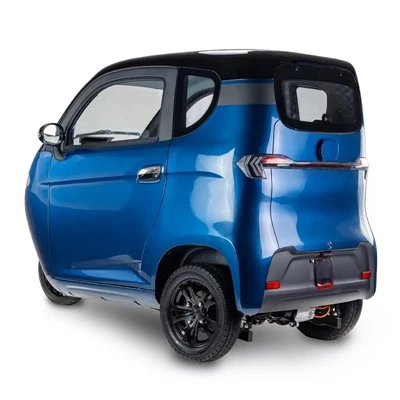
If you’re a fleet manager, independent delivery driver, or anyone looking to upgrade your delivery vehicle, the cabin noise level isn’t something to overlook. It’s a key factor that affects productivity, safety, and employee well-being. As a supplier of four-wheel delivery electric vehicles, we’ve spent years testing, refining, and perfecting our designs to make sure our vans not only lower your carbon footprint but also make your daily work easier. We’re here to talk through any questions you have about our EVs, how they compare to gas-powered options, and how we can work with you to find the right vehicle for your needs. Reach out to us to schedule a test drive, get a detailed noise test report, or discuss pricing and fleet options—we’re ready to help you make the switch to a quieter, more efficient delivery van.
Electric Cargo Vehicle References
- North American Council for Freight Efficiency. (2022). “Delivery Electric Vehicle Cabin Noise: A Comparative Analysis.”
- World Health Organization. (2021). “Environmental Noise Guidelines for the European Region.”
- U.S. Department of Energy. (2023). “Commercial Vehicle Noise and Driver Fatigue Report.”
- Society of Automotive Engineers. (2023). “Sound Insulation Standards for Light Commercial Electric Vehicles.”
Taizhou Xiangyuan New Energy Technology Co., Ltd.
As one of the most professional four wheel delivery electric vehicle manufacturers and suppliers in China, we’re featured by quality products and low price. Please rest assured to wholesale cheap four wheel delivery electric vehicle made in China here from our factory. Contact us for customized service and pricelist.
Address: NO.7HUANGJIN ROAD,METAL RESOURCES RECYCLING INDUSTRY BASE, LUQIAO, TAIZHOU, ZHEJIANG
E-mail: order@jiajiev.com
WebSite: https://www.jiaji-ev.com/
