Hey there, if you’re running a digital signage company, you know that one bad test can turn a big client’s launch into a total disaster—like the time we had a café client whose menu board glitched mid-brunch, sending customers into a confusion spiral (shoutout to our quick fix that saved the day, but still, not a situation we want to repeat). As a digital signage supplier, we’ve tested hundreds of client campaigns, from retail promotional screens to hospital wayfinding boards, and today I’m spilling the exact, no-BS steps we swear by to make sure your content works before it ever hits a wall. Let’s dive in. Digital Signage
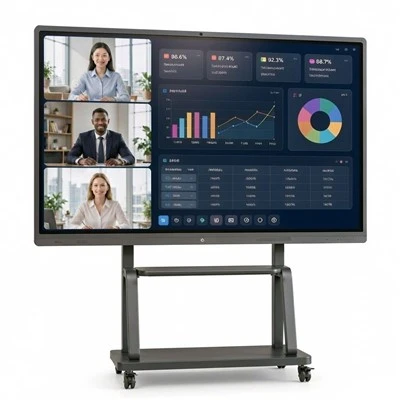
First off, let’s get one thing straight: testing isn’t just “does the video play?” It’s about checking every tiny thing that could go wrong, because digital signage lives in the real world—where Wi-Fi cuts out, sunlight bleaches screens, and someone might accidentally tap a touchscreen the wrong way. We break our testing process into four parts: pre-deployment mock tests, on-location dry runs, real-world condition checks, and post-launch monitoring. No skipping any step, trust me.
Let’s start with the pre-deployment mock test, which is all about catching digital bugs before you even step foot on the client’s property. When a client sends us content—whether it’s a 10-second social media reel, a multi-page PDF menu, or interactive wayfinding steps—we throw it into our test environment first. That’s a replica of whatever hardware they’re using: if it’s a 55-inch 4K retail screen, we load it onto a spare unit of that exact model; if it’s a tablet for a lobby kiosk, we test it on that same tablet. Here’s where the small stuff trips people up: for example, a horizontal TikTok might play sideways because the screen’s orientation is locked, or a 1080p video is stretched weird on a 4K display. We also check file types—some screens hate MP4s with extra metadata, or PNGs that are too big (we had a client once whose image file was 50MB, so it took 20 seconds to load when the screen was on a slow Wi-Fi). We use free tools like VLC Media Player and Chrome DevTools to test web-based content too—if you’re embedding a Google Form or a promotional web page, DevTools lets us simulate different screen sizes and slow internet speeds to make sure it doesn’t time out. Pro tip: we always test the content for at least 24 straight hours. Why? Because some bugs only pop up after the screen runs content overnight—like a player that crashes when it repeats a video 100 times, or a script that glitches at 2 a.m. when the server’s bandwidth is lower.
Next up, the on-location dry run. This is where you install the content on the actual hardware at the client’s site—we never test from our office alone, because the physical location changes everything. Last year, we worked with a gym client whose screen was near a big window; from our office, the screen looked fine, but at noon, sunlight washed out half the text. So here’s what we do: when we do a dry run, we test during the exact times the content will actually display. If it’s a coffee shop’s morning menu board, we show up at 7 a.m. and check brightness levels; if it’s a mall’s Black Friday promotion, we test in the middle of the day when foot traffic is high. We also test all interactive features—touchscreens, QR codes, motion sensors—because a QR code that works on our office Wi-Fi might not pick up a signal in a basement retail store. We had a restaurant client whose QR code for contactless menus only worked if you stood 2 inches away; during dry run, we moved it to eye level and tested from a normal distance, and fixed the readability issue immediately. Also, don’t forget sound—if you’re playing audio (like a commercial for a car dealership), make sure it’s not too loud for a hospital (shoutout to our hospital clients who asked for 20db max sound) and not too quiet for a gym where music is already blasting. We use a simple decibel meter (you can get a cheap one on Amazon) to make sure sound levels are within the client’s requirements.
Then, the real-world condition checks. Digital signage isn’t in a climate-controlled office; it’s in places where temperature fluctuates, dust builds up, and Wi-Fi is spotty. We test content under different conditions: if the screen is outside (like for a bus stop ad), we leave it running for a few days in rain or heat; if it’s in a factory with lots of dust, we check that the video player doesn’t overheat because dust clogs its vents. We also test offline functionality—because if Wi-Fi cuts out for an hour, does the screen keep playing the content it had, or does it go black? Most modern signage players have offline modes, but we’ve seen some cheaper models fail here. We simulate a Wi-Fi cutout by unplugging the Ethernet cable (or turning off Wi-Fi on the test device) and make sure the content still displays correctly. For interactive screens, we test what happens if someone taps the wrong button—does it crash, or does it show a friendly error message? We add a little “Oops! Tap home to go back” graphic to avoid confused customers. Another big one: power outages. If the screen loses power for 10 minutes, does it restart automatically? Some players need a manual reboot, which is a huge problem for a remote location like a gas station. We test this too, and set up automatic restart settings if needed.
Last, but definitely not least, post-launch monitoring. Testing doesn’t stop when the content goes live. We use our own digital signage management platform to track how each screen is performing—things like load times, playback errors, sound levels, and even whether the interactive features are working. For the first week after launch, we check in daily; after that, we do a weekly check for the first month. We also ask the client to send feedback—like “did anyone say the touchscreen was too slow?” or “did the video cut out during the lunch rush?” We had a clothing store client whose screen was showing a fashion reel, and they told us customers were complaining the text was too small; we jumped in remotely, resized the text, and it fixed the issue in 5 minutes. Pro tip: we set up alerts for errors—if a screen crashes, we get a text immediately, so we can fix it before the client even notices.
Now, let’s talk about a few common mistakes we see clients make when testing their own content. First, testing only once. If you test a video for 5 minutes, it might work, but if you test it for 24 hours, you might find it crashes at the 12-hour mark. Second, ignoring the environment. A screen that works in your office might not work in bright sunlight, cold weather, or a noisy factory. Third, not involving the client. The client knows their audience best—if they’re a school, they might want bigger text for kids; if they’re a bank, they might need to avoid bright colors that clash with their branding. We always loop the client in during testing to make sure the content fits their needs.

At the end of the day, testing is all about peace of mind. When you launch content, you want it to work perfectly, no surprises. If you’re a business that needs digital signage content tested, or if you’re looking to set up digital signage for your space, reach out to us. We’ve worked with all kinds of clients—cafés, hospitals, retail stores, gyms—and we’ll walk you through our testing process to make sure your content hits the ground running.
Parcel Locker References:
- Digital Signage Federation. (2022). Best Practices for Pre-Deployment Testing.
- Display Supply Chain Consultants. (2023). Environmental Considerations for Outdoor Digital Signage.
- W3C. (2021). Accessibility Guidelines for Interactive Digital Signage.
Zhejiang Diankun Intelligent Technology Co., Ltd.
As one of the most professional digital signage manufacturers and suppliers in China, we also support customized service. Please feel free to wholesale durable digital signage in stock here from our factory. Welcome to contact us for pricelist.
Address: Building 12, No.889 Huancheng North Road, Deqing County, Huzhou City, Zhejiang Province
E-mail: zys@hzdiankun.com
WebSite: https://www.chnkiosk.com/
