If you’ve ever been curious about how power companies get super-accurate readings of energy use—whether for your home’s utility bill or a large industrial plant’s operations—you’ve probably stumbled across the term “combined instrument transformer” (often shortened to CIT around these parts). Let me break this down like I would explain it to a new customer at our shop, no stuffy jargon that makes your eyes glaze over. Combined Instrument Transformer
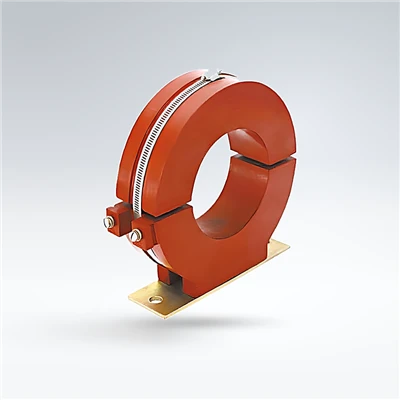
First, let’s start with why transformers even matter for metering. When electricity runs through power lines, the voltage is way too high (we’re talking thousands of volts here, sometimes tens of thousands) and the current is massive—way more than any standard meter or monitoring device can handle directly. If you tried to plug a regular meter into a 13,800-volt line, it’d blow up instantly, and no one would get a reading. Traditional “separate” instrument solutions use two separate gadgets: one for voltage (a potential transformer, or PT) and one for current (a current transformer, or CT). That works, but it’s bulky, takes up extra space, and means twice the wiring, twice the connections, and more places for things to go wrong (like loose wires throwing off readings).
A CIT is basically a PT and CT mashed into one compact, single unit. That’s the big sell for most of our industrial and utility customers. Instead of mounting two big boxes next to each other, they just install one of ours, and it does both jobs at once. It steps down the high voltage to a safe, standard level (usually 120 volts for metering, or 1 ampere/5 amps for current) that regular meters can read, all while sending accurate data about how much power is being used, generated, or lost in a line.
Now, let’s talk accuracy—this isn’t just a nice-to-have for metering, it’s make-or-break. Utilities rely on these readings to bill customers correctly, and industrial facilities use them to track their energy efficiency, spot waste, and avoid overpaying on their power bills. If a transformer is off by even a fraction of a percent, over a year that adds up to thousands (or even millions) of dollars in incorrect charges or lost energy savings. Our CITs are calibrated to meet or exceed international standards—we test every unit before it leaves our facility to make sure voltage and current ratios are spot-on, no drift over time that would mess up readings.
Another key point: space is at a premium these days, especially in older substations or compact industrial plants where there’s no room to spare. We’ve had customers come to us after struggling to fit two separate PTs and CTs into a small panel; switching to a CIT freed up 30-40% of that panel space, which meant they could add other equipment they needed without a full overhaul of their setup. Plus, fewer connections mean less risk of human error during installation—no mixing up PT and CT wiring, which is a common headache with separate units.
Wait, but is a CIT right for every job? No, let’s be honest about that. Some low-voltage residential setups might not need one—your average home meter is designed for lower power levels, so separate transformers aren’t necessary there. But for medium to high-voltage applications (like commercial buildings, industrial factories, distribution substations, and even renewable energy sites like wind farms or solar arrays) they’re a game-changer. Renewable energy operators, for example, need super accurate readings to track how much power they’re feeding back into the grid, and CITs hold up way better in outdoor, harsh environments than some separate models we’ve seen customers use in the past.
Let me share a quick example of a recent customer to put this in perspective. A mid-sized manufacturing plant in the Midwest had been using two separate transformers for their main power line, but after a few years, they noticed their energy bills were higher than they thought they should be. Their electrician checked and found a loose connection in their old CT, which was throwing off current readings by 2.5%—over a year, that added up to almost $15,000 in overcharges. They swapped out their old setup for three of our CITs (one for each phase of their 12,470-volt line), and now their readings are within 0.1% accuracy. They’ve already saved enough on their first bill to cover the cost of the units, and they don’t have to worry about loose connections anymore because all the components are inside one sealed housing.
Now, a few things to look for when you’re shopping for a CIT—not all units are created equal, and some cut corners to save a buck. First, check the insulation class. Units that are installed outdoors need to handle rain, extreme temperatures, and even small pests (like rodents chewing on wiring). Our CITs use outdoor-grade insulation that’s rated for temperatures from -40°F to 185°F, so they hold up in both freezing Northern winters and sweltering Southern summers. Second, think about your application: are you using it for billing metering, or for monitoring power quality? Some CITs are designed specifically for high-accuracy billing, while others might be better for general monitoring. We can help you pick the right one based on your voltage level, current load, and what you need the readings for.
Another bonus of our CITs: they’re low-maintenance. Unlike older transformers that need oil changes or regular inspections, most of our units are dry-type (no oil, so no leaks or hazardous waste to deal with) and sealed. That means you install them and forget about them for years, only needing to check them during routine substation maintenance. For industrial facilities, that means less downtime and fewer service calls, which translates to more money saved.
Wait, let’s address a common misconception: some people think combining two transformers into one unit would mean lower quality, like cutting corners. But that’s not the case at all. We engineer our CITs using the same high-quality materials as separate PTs and CTs—we just integrate them into a single housing to save space and reduce complexity. The windings, insulation, and calibration are all just as precise, if not more so, because we have to make sure both components work in harmony without interfering with each other. We also test each unit for dielectric strength (to make sure it can handle high voltage without breaking down) and phase angle accuracy, which is critical for power factor calculations—something industrial customers use to improve efficiency.
So, who should use a combined instrument transformer for metering? Let’s list the main use cases:
- Distribution substations for municipal power grids
- Commercial and industrial buildings with high power loads
- Renewable energy generation sites (solar, wind, hydro)
- Data centers, which need super reliable power monitoring to avoid downtime
- Mining operations, where power is heavy and space is limited
If you’re in any of these categories, and you’re tired of bulky equipment, inaccurate readings, or high maintenance costs, our CITs are worth checking out. We’ve been working with utilities and industrial operators across the country for years, and we’ve helped dozens of customers upgrade from separate transformers to CITs and cut their energy costs and maintenance time.
Now, I don’t want to be pushy, but if you’re ready to learn more, or you have a specific application you need help with, feel free to reach out to our team to talk through your needs. We can walk you through sizing, accuracy requirements, installation tips, and even provide references from customers in your industry. No pressure—we just want to make sure you get the right solution for your metering needs, whether that’s a CIT or something else that works better for you.
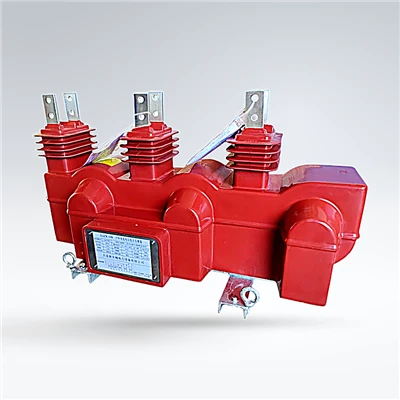
At the end of the day, the goal of metering transformers is simple: get accurate, safe readings so you know exactly how much power you’re using, and don’t pay more than you should. Combined instrument transformers make that process easier, cheaper, and more reliable than the old separate setup. If you’re tired of dealing with bulky, finicky transformers that cause headaches, it’s definitely worth giving a CIT a look.
Instrument Current Transformers for Ring Main Unit References
- International Electrotechnical Commission (IEC) Standard 60044-1: Instrument Transformers – Part 1: Current Transformers
- International Electrotechnical Commission (IEC) Standard 60044-2: Instrument Transformers – Part 2: Voltage Transformers
- Institute of Electrical and Electronics Engineers (IEEE) Standard C57.13: Standard for Instrument Transformers – Requirements for Metering, Protection, and Control Application
- U.S. Department of Energy, “Energy Metering Technologies for Industrial Facilities” – Office of Energy Efficiency & Renewable Energy
Dalian Xin’anyue Electric Power Equipment Co., Ltd.
Dalian Xin’anyue Electric Power Equipment Co., Ltd. is one of the most reliable combined instrument transformer manufacturers and suppliers in China, featured by quality products and good price. Please rest assured to wholesale durable combined instrument transformer in stock here from our factory. We also accept customized orders.
Address: No.99, Group 1, Chongwangmiao Community, Taiping Street, Pulandian District, Dalian City, Liaoning Province, China
E-mail: sales@dlxay.com
WebSite: https://www.xayelectric.com/
